Food is how Iraqis show love. It is how we welcome strangers, celebrate weddings, mourn losses, close deals, and fill the hours between prayers. Every tour I run is also a food tour, whether I planned it that way or not — because in Iraq, someone is always feeding you. If you leave this country hungry, something has gone very wrong.
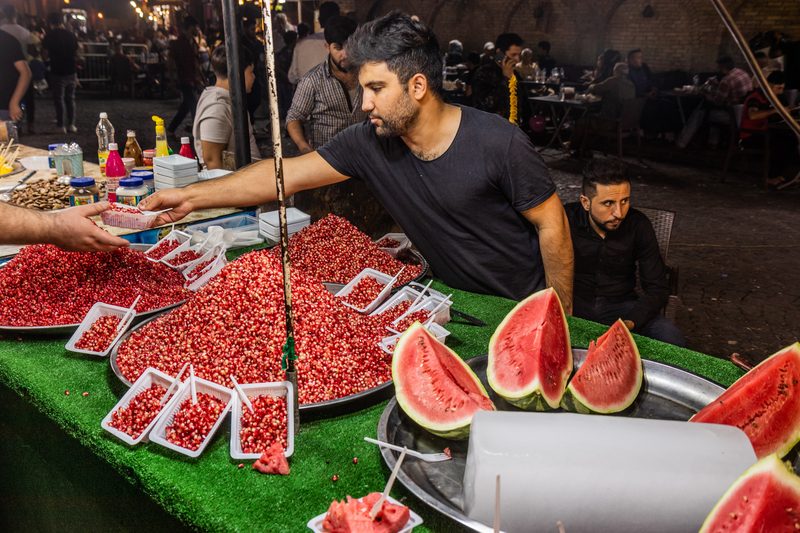
Iraqi cuisine is one of the oldest in the world. The land between the Tigris and Euphrates produced some of the first written recipes in human history — clay tablets from ancient Mesopotamia describing stews and broths that would not look out of place in a Baghdad kitchen today. Thousands of years of Persian, Turkish, Arab, and Kurdish influence have shaped what Iraqis eat now, and the result is food that is rich, generous, and deeply spiced. For more on planning your trip, see my Iraq travel guide.
The Main Dishes
Masgouf
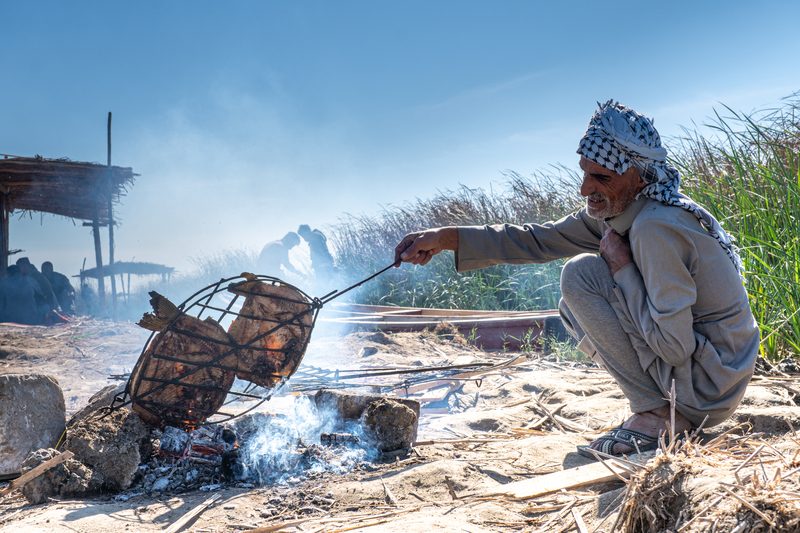
This is Iraq’s national dish and the one thing every visitor must eat. Masgouf is river carp, butterflied and propped open on stakes around a wood fire, grilled slowly until the skin is crispy and the flesh is smoky and tender. It is finished with tomatoes, onions, and a squeeze of lemon. The best masgouf is eaten along the Tigris in Baghdad, especially on Abu Nuwas Street, where riverside restaurants have been grilling fish this way for generations. Call ahead — a proper masgouf takes over an hour to prepare, and that is part of the ritual. You wait, you drink tea, you watch the fire, and then you eat one of the best things you will ever taste.
Kebab

Iraqi kebab is different from what you get in Turkey or Iran. The meat — usually lamb or a lamb-beef mix — is heavily spiced, mixed with onion and parsley, pressed onto wide flat skewers, and grilled over charcoal. The result is juicier and more flavourful than most kebab you have had elsewhere. It is served with flatbread, grilled tomatoes, raw onion, and a sharp sumac sprinkle. In Baghdad, you will find excellent kebab in almost every neighbourhood, but the best places are the no-frills spots where the grill has been running since morning and the queue tells you everything you need to know.
Quzi
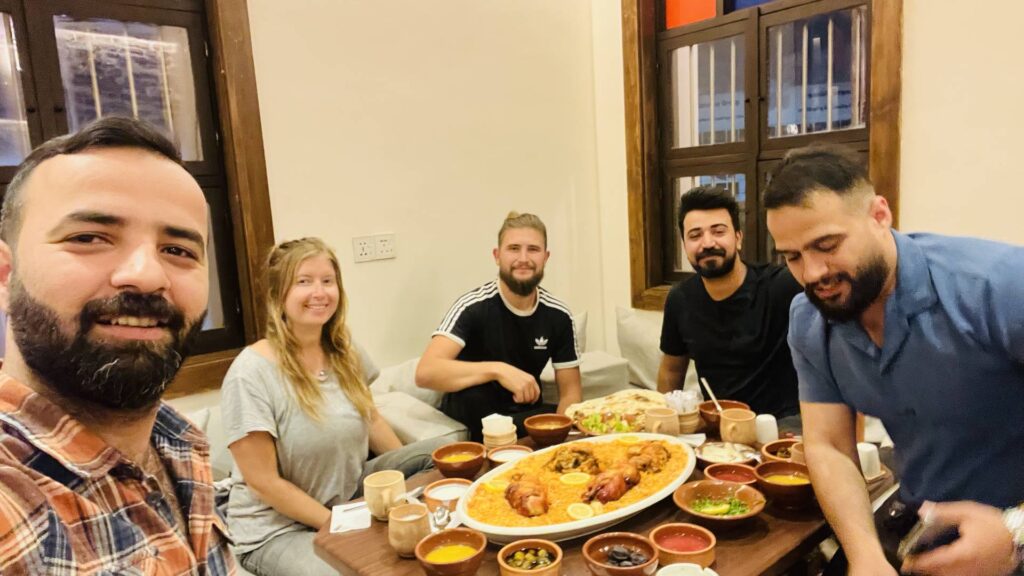
Quzi is what Iraqis cook when they want to impress. A whole lamb, slow-roasted until it falls apart, served over a mountain of fragrant rice studded with almonds, raisins, and cashews. This is a celebration dish — weddings, holidays, honoured guests. You will not find it in every restaurant, but when an Iraqi family invites you to a special meal and quzi appears, you know you are being treated like family. It is one of the most generous plates of food you will ever see.
Dolma
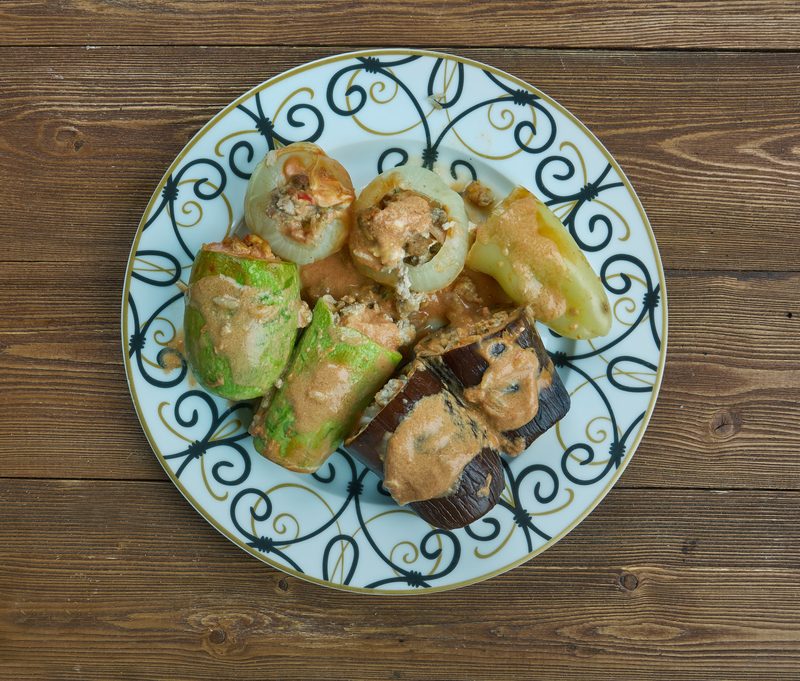
Iraqi dolma is a labour of love. Grape leaves, onions, peppers, courgettes, aubergines, and tomatoes, all carefully stuffed with a mix of spiced rice and minced meat, then packed tightly into a pot and slow-cooked until everything melds together. Every Iraqi family has their own recipe, and every Iraqi will tell you their mother’s is the best. The dish takes hours to prepare and about five minutes to demolish. It is comfort food at its finest.
Tashreeb
Tashreeb is the Iraqi answer to the question of what to do with yesterday’s bread. Pieces of flatbread are torn and soaked in a rich broth — usually lamb or chicken — with chickpeas and spices until the bread absorbs the liquid and becomes almost silky. It is a classic Iraqi breakfast, hearty enough to carry you through the day. There are regional variations, but the principle is always the same: good bread, better broth.
Biryani (Iraqi-Style)
If you have only had Indian biryani, the Iraqi version will surprise you. Iraqi biryani uses different spice blends — more cardamom and baharat, less turmeric — and the rice is cooked with the meat in a way that makes the whole pot fragrant. The rice should be separate, each grain distinct, with a crunchy bottom layer called hakkaka that everyone fights over. It is a staple in Baghdad restaurants and a regular feature on my tours.
Kubba
Kubba is Iraq’s great contribution to the world of stuffed things. The outer shell is made from either bulgur wheat or rice, and inside is a spiced meat filling with onion and pine nuts. There are dozens of regional variations — kubba halab (fried in a torpedo shape), kubba mosul (flat and round, a northern specialty), kubba hamudh (served in a sour tomato broth). You will encounter kubba everywhere in Iraq, and you should try every version you find.
Tepsi Baytinjan
This is Iraq’s version of a layered casserole. Slices of fried aubergine, meatballs or minced meat, potatoes, and tomatoes, layered in a round baking tray and slow-cooked in tomato sauce. It is homestyle cooking — the kind of dish that fills the house with smell and the table with happy people. You will find it in traditional restaurants and it is always worth ordering.
Pacha
I will be honest with you: pacha is not for everyone. It is a stew made from sheep’s head and trotters, slow-cooked overnight until everything is tender and gelatinous. Iraqis eat it for breakfast, usually very early in the morning, and the dedicated pacha restaurants open before dawn. The taste is rich, the texture is unusual, and the experience is unforgettable — in one direction or another. I always offer it to my guests, and about half of them are glad they tried it. The other half are glad they tried it too, but for different reasons.
Margat Bamia
A simple, beautiful stew of okra and lamb in a tomato-based sauce, served over white rice. This is everyday Iraqi home cooking — the kind of meal that appears on a Tuesday evening and nobody complains. The okra is cooked until tender but not slimy (Iraqis are particular about this), and the lamb falls apart in the sauce. It is one of those dishes that tastes like somebody’s grandmother made it, because somebody’s grandmother probably did.
Street Food and Snacks
Falafel
Iraqi falafel is made from chickpeas, herbs, and spices, fried until the outside is shatteringly crispy and the inside is bright green. In Baghdad, it is served stuffed into samoon bread with pickles, tahini, and whatever salad the vendor has going. It costs almost nothing and it is one of the best things you will eat on the street. Breakfast, lunch, or a late-night snack — falafel works at any hour in Iraq.
Samoon
Samoon is Iraq’s signature bread — a diamond-shaped, slightly puffy flatbread baked in a tandoor-style oven. It is everywhere: piled up on breakfast tables, stuffed with kebab for lunch, torn apart and dipped into stew for dinner. Fresh samoon, still warm from the oven, needs absolutely nothing on it to be perfect. You will eat more of it than you expect.
Shawarma
Iraqi shawarma is wrapped in thin flatbread rather than stuffed into a pita, and it comes with pickles, garlic sauce, and sometimes chips tucked inside. The best shawarma spots have the meat rotating all day, shaved to order, and a queue out the door. It is fast, cheap, and deeply satisfying — exactly what you want after a long day of sightseeing.
Lablabi
A warm chickpea soup, heavily spiced and served with bread torn into the bowl. Lablabi is a popular breakfast in Baghdad, especially in winter. It is simple, filling, and exactly the kind of thing you want before a morning of walking around a city. You will find it at street stalls and small restaurants, usually served from a giant pot that has been simmering since before you woke up.
Timman wa Fasolia
Rice and red beans in a tomato-based stew. This is working-class Iraqi food — inexpensive, filling, and served in huge portions. It appears on lunch menus everywhere and is one of those dishes that tourists overlook because it sounds plain. It is not plain. The spicing is more complex than it looks, and if you find a good version, you will understand why Iraqis eat it several times a week.
Desserts
Kleicha
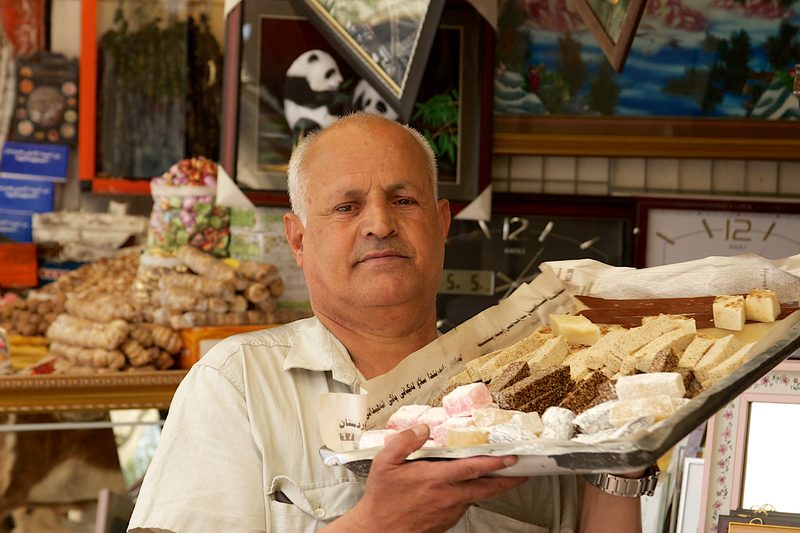
Iraq’s national cookie, and possibly the oldest cookie recipe in the world. Kleicha traces its origins back to ancient Mesopotamia, where Sumerians baked similar date-filled pastries as offerings to the goddess Ishtar. Today, every Iraqi family makes kleicha for Eid, Christmas, and other celebrations — date-filled spirals, walnut-stuffed crescents, and coconut varieties, all fragrant with cardamom. Making kleicha is a family event: grandmothers direct, mothers knead, children shape. You will be offered kleicha in homes, hotels, and shops across Iraq, and you should always accept.
Halawet al-Jibn
Sweet cheese rolls filled with cream and drizzled with rose-scented syrup. The dough is made from stretchy mozzarella-like cheese cooked with semolina and sugar until it becomes pliable, then rolled around clotted cream and cut into pieces. It is sweet, rich, and completely addictive. You will find it in sweet shops across Baghdad and the south.
Zalabia
Iraqi donuts — spirals of batter deep-fried until crispy and soaked in sugar syrup scented with rose water or saffron. They are best eaten warm, when the outside is still crunchy and the inside is soft and syrupy. Zalabia vendors appear in the evenings, especially during Ramadan, and the smell alone will pull you across the street.
Drinks
Iraqi Chai
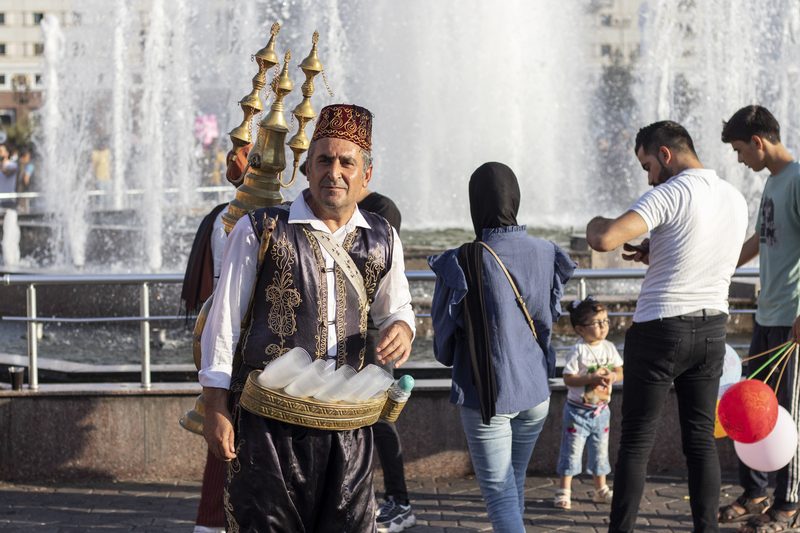
Tea in Iraq is not a drink — it is a social institution. Iraqi chai is black tea, brewed strong and sweet, served in small istikan glasses that you will see everywhere: in homes, offices, shops, construction sites, police checkpoints, and on every table of every restaurant. Refusing tea in Iraq is almost impossible and mildly offensive. The tea is usually flavoured with cardamom or dried lime, and it arrives at every point in the day. By the end of your trip, you will have drunk more tea than you thought physically possible, and you will miss it when you get home.
Arak
Iraq’s traditional spirit — a clear anise-flavoured drink that turns milky white when you add water. Arak is available in Baghdad and throughout Kurdistan, usually served with meze (small dishes of nuts, pickles, salad, and cheese) as part of a long, social evening. It is strong, it sneaks up on you, and the meze exists partly to slow you down. If you drink, arak with meze along the river in Baghdad is one of the great Iraqi experiences.
Regional Specialties
Baghdad
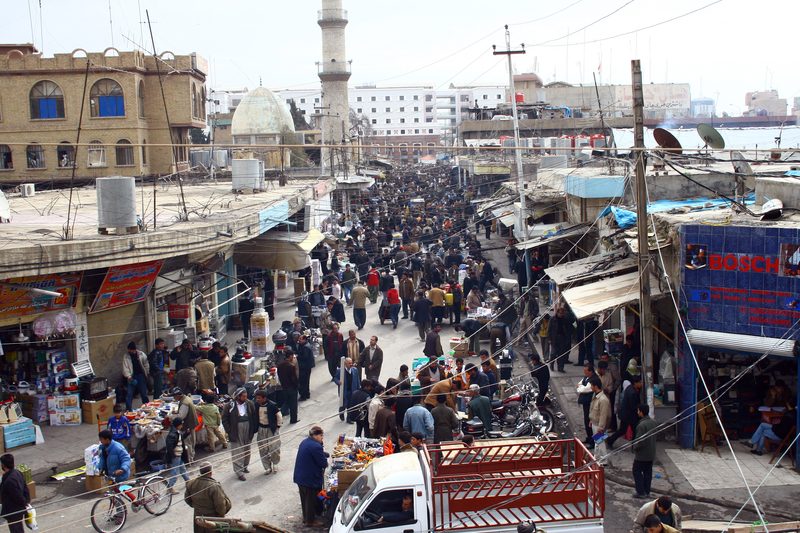
Baghdad is where you eat best and most. The capital has everything — from street falafel at six in the morning to masgouf dinners along the Tigris at midnight. Abu Nuwas Street is the classic spot for riverside grilled fish. Karrada is packed with restaurants, cafes, and juice bars. The streets around Shorja market are excellent for street food at lunchtime. For a full day in the city, see my guide to things to do in Baghdad. Every Baghdad city tour I run includes eating — there is no way around it and no reason to try.
Kurdish Cuisine
The food in Kurdistan — Erbil, Sulaymaniyah, Duhok — leans more heavily on grilled meats, fresh herbs, yogurt, and salads. Kurdish kebab is excellent, often served with a mound of raw herbs and spring onions that you eat by the handful alongside the meat. Dolma is popular here too, and Kurdish nan bread, baked in clay ovens, is some of the best bread in Iraq. The restaurant scene in Erbil has grown enormously, with everything from traditional to modern Iraqi fusion.
Southern Iraq and the Marshes
In the Mesopotamian Marshes, the food is simple and extraordinary. Freshwater fish, caught that morning, grilled whole over reed fires. Rice cooked with broad beans. Thick buffalo yogurt. There are no menus and no restaurants — you eat what the marsh families eat, sitting on the floor of a reed mudhif (guesthouse), and it is some of the most memorable food in the country. The masgouf in the south, cooked over open flames by the waterside, rivals anything in Baghdad.
Basra
Basra, in the far south near the Gulf, brings a seafood influence you do not find elsewhere in Iraq. Zubaidi (silver pomfret) is the local favourite — a delicate white fish grilled or fried and served with rice. You will also find more Gulf-influenced flavours here: dried limes, saffron, and heavier use of spices in rice dishes. Basra’s food is subtly different from the rest of Iraq, and it is worth spending time in the south just to eat here.
Food on My Tours
Every tour I run includes food as a central part of the experience. A Baghdad day tour always includes a street food walk — falafel, samoon, fresh juice, and usually at least one dish you did not expect. On southern tours, we eat masgouf by the Marshes and fish straight from the rivers. In the north, it is kebab and Kurdish grilled meats. I choose restaurants I eat at myself, places where the food is honest and the welcome is real. My guests sit with me, eat what I eat, and by the end of the trip, most of them know more Iraqi dishes by name than they ever expected.
If you have dietary requirements — vegetarian, halal, allergies — Iraq is more accommodating than you might think. Rice dishes, vegetable stews, salads, bread, and falafel are everywhere. Let me know in advance and I will make sure every meal works for you.
Every tour includes Iraqi food experiences.
From Baghdad street food to a masgouf lunch in the Marshes, eating is part of the journey. Tell me what you want to taste and I’ll build it into your custom itinerary.
Frequently Asked Questions
What is the national dish of Iraq?
Masgouf — river fish grilled over an open wood fire. It is Iraq’s most iconic dish and something every visitor should try, ideally along the Tigris in Baghdad.
Is Iraqi food spicy?
Iraqi food is richly spiced but not hot in the way that Indian or Thai food can be. The emphasis is on warmth and depth — cardamom, baharat, cumin, coriander, dried lime — rather than chilli heat. If you can eat Middle Eastern or Mediterranean food comfortably, you will have no problems in Iraq.
Can vegetarians eat well in Iraq?
Yes. While Iraq is a meat-loving country, there are excellent vegetarian options: falafel, dolma (can be made without meat), lablabi, rice and bean dishes, fresh salads, bread, and a wide variety of vegetable stews. In cities like Baghdad and Erbil, modern restaurants offer dedicated vegetarian menus.
Is the food safe to eat?
Street food and restaurant food in Iraqi cities is generally safe. Use common sense — eat where the locals eat, choose busy stalls with high turnover, and drink bottled water. On my tours, I take you to places I eat at regularly and trust completely.
What is Iraqi breakfast like?
Iraqi breakfast is hearty. Expect some combination of flatbread, cream (gaimar), honey, eggs, cheese, and tea. Tashreeb (bread in broth) and lablabi (chickpea soup) are popular breakfast dishes. In Kurdistan, breakfast spreads are especially generous, with fresh herbs, yogurt, and grilled tomatoes alongside the bread and cheese.