The Iraq eVisa is usually the first real step — and the one that causes the most confusion. Federal eVisa or Kurdistan eVisa? Which portal? What does it actually cost? And what happens if you pick the wrong one?
I help every single guest with their visa before they arrive. I’ve seen approvals come through in 6 hours and rejections caused by a blurry passport scan. I know the quirks of the Iraq e-visa system because I deal with it daily — not once a year.

This guide walks you through the entire Iraq evisa process step by step: eligibility, the application, costs, common mistakes, and what happens when you actually land. If you’re still in the early planning stages, you might want to start with my safety breakdown by region to get a feel for the country first.
Do You Need a Visa for Iraq?
Yes. Almost every nationality needs a visa to enter Iraq. There are no exceptions for EU, US, or UK passport holders — everyone goes through the process.
Visa on arrival is suspended. Iraq offered visa on arrival until March 2025, when the government suspended the programme. You’ll still find outdated blog posts saying you can get one at the airport. You can’t. Don’t show up without a visa.
The good news: 37 nationalities are now eligible for the eVisa, which you can apply for online before your trip. Key eligible nationalities include the United States, United Kingdom, Canada, Australia, all EU member states, Japan, South Korea, and most of the Gulf states. The full list is on evisa.iq.
If your nationality isn’t on the eVisa list, you’ll need either a local sponsor (your tour company or guide can arrange this) or an embassy visa from an Iraqi diplomatic mission in your country. This takes longer but it’s doable — I’ve helped guests from dozens of nationalities navigate this process.
Israeli passport holders: Entry to Iraq is prohibited for holders of Israeli passports. This is a legal restriction, not a personal policy. Passports with Israeli stamps from other countries are generally not an issue, as Iraq doesn’t scrutinise third-country stamps the way some neighbouring countries do.
Federal Iraq eVisa vs Kurdistan eVisa — What’s the Difference?
This is the single most important thing to understand about the Iraq visa, and it trips people up constantly. Iraq has two separate eVisa systems. Choose the wrong one and you could end up paying extra or limiting where you can go.
| Federal eVisa | Kurdistan eVisa | |
|---|---|---|
| Cost | 206,000 IQD (~$160 USD) + 5.5% international card fee | $80 USD |
| Coverage | All of Iraq including Kurdistan | Kurdistan region ONLY (unless you check the federal entry box — see below) |
| Entry points | Baghdad, Basra, Najaf airports + land borders | Erbil and Sulaymaniyah airports, Turkey/Iran land borders into Kurdistan |
| Portal | evisa.iq → “Direct e-visa” | visit.gov.krd |
| Processing time | 6–72 hours | Similar |
Here’s where it gets important — and where most guides online get it wrong.
If you’re flying into Baghdad, Basra, or Najaf (or crossing a land border into federal Iraq from Jordan, Kuwait, Saudi Arabia, or Iran — not Turkey), you need the federal eVisa only. When you land, they’ll print a full-page visa sticker and paste it into your passport. With that sticker, you can also enter Kurdistan without paying for a separate visa. Your eVisa PDF will have a red border and read “Issuing Authority: Directorate of Residence Affairs.”
If you’re flying into Erbil or Sulaymaniyah (or crossing into Kurdistan from Turkey or Iran) and you also want to visit federal Iraq afterwards, you still apply on evisa.iq — but during the application you must check “Yes” on the box that says “Visa and entry authority from the Kurdistan Region of Iraq.” You’ll pay the eVisa fee online, and then pay an additional 100,000 IQD (~$76 USD) in cash at the airport when you arrive. Your eVisa PDF will have a blue border and read “Issuing Authority: Kurdistan Region of Iraq.”
If you’re only visiting Kurdistan — Erbil, Sulaymaniyah, Duhok — with no plans to head south, the Kurdistan eVisa from visit.gov.krd is sufficient and cheaper.
My recommendation: fly into Baghdad. It’s simpler, avoids the extra 100,000 IQD cash payment, and your federal eVisa covers everything — including Kurdistan. If you’re considering a Kurdistan tour as a starting point before exploring the rest of the country, landing in Baghdad first saves you both hassle and money.

How to Apply for the Iraq eVisa — Step by Step
The federal eVisa application through evisa.iq is straightforward, but the portal isn’t the most user-friendly website you’ll ever use. Here’s exactly what to do.
Step 1 — Check Your Eligibility
Visit evisa.iq and check whether your nationality is on the eligible list. If it is, you can proceed with the online application. If it’s not, reach out to me and I can advise based on your specific nationality — I arrange sponsor letters for nationalities that aren’t eligible for the eVisa.
Step 2 — Prepare Your Documents
Before you start the form, have these ready:
- Passport — Must have at least 6 months validity from your planned entry date. Scan the photo page in high resolution (colour, full page, no glare).
- Passport photo — White background, clear face, no glasses, no shadows. Phone photos against a white wall work if the lighting is good.
- Accommodation address and phone number — The application asks for the full address and phone number of your first hotel, Airbnb, or other accommodation in Iraq. If you’re travelling with me, I provide this.
Step 3 — Go to evisa.iq and Select “Direct e-visa”
This is a detail that confuses people. When you arrive at evisa.iq, click “Apply Now” and then select “Direct e-visa.” Don’t go to “Create an Account” — that’s a different flow. The direct e-visa option is what you want for a standard tourist application.
Step 4 — Select Your Visa Type
The first question on the form asks you to choose a visa type. This is a crucial step that most guides don’t explain:
- Ordinary visa — Allows one entry within 60 days of issue and stay for the full 60-day period. Costs 206,000 IQD (~$160 USD). This is the one most tourists should select.
- Visit visa — One entry within 90 days of issue, stay limited to 30 days. Costs 151,000 IQD (~$114 USD). Good if you’re sure your trip is under 30 days and you want to save a bit.
- Tourist visa — 30-day stay, requires sponsorship by a licensed tourism company. Your tour operator arranges this one — you can’t apply for it independently.
If in doubt, go with the Ordinary visa. It gives you the most flexibility.
Step 5 — Complete the Application Form
Personal Information Section
Standard details: full name (exactly as it appears on your passport), date of birth, nationality, passport number, issue and expiry dates. Double-check everything against your passport — even a small typo can cause a rejection or delay.
Kurdistan Entry Box
If you plan to enter Iraq through Erbil or Sulaymaniyah airport (or a Kurdistan land border), check “Yes” on “Visa and entry authority from the Kurdistan Region of Iraq.” If you’re flying into Baghdad or another federal airport, you can leave this unchecked.
Document Upload Tips
This is where most applications go wrong. The photo upload is strict:
- White background — not off-white, not grey, not a wall with shadows
- Face clearly visible, eyes open, mouth closed
- No glasses, no head covering (unless religious)
- File size and format within the portal’s requirements (JPEG, under 500KB typically)
For the passport scan, photograph or scan the full photo page. Make sure all four corners are visible, the text is sharp, and there’s no glare from a flash or overhead light. A clear phone photo on a dark surface works well.
Step 6 — Pay the Fee
Payment is by credit or debit card. The Ordinary visa costs 206,000 IQD (~$160 USD), plus a 5.5% processing fee on international card transactions. The fee is non-refundable, even if your application is rejected — this is one reason to get everything right the first time.
Some cards from certain banks get declined by the portal. If this happens, try a different card or contact your bank to authorise the international transaction.
Step 7 — Wait for Approval
Processing officially takes 6 to 72 hours. In my experience, most approvals come within 24 hours. But I’ve seen it take up to 5 days during busy periods, especially around religious holidays when the offices are stretched.
Apply at least 1 to 2 weeks before your trip. There’s no benefit to applying months in advance (the visa is valid for a set window from the date of issue), but leaving it to the last 48 hours is risky.
Step 8 — Print Your eVisa
Once approved, download the PDF and print it. Yes, print it on paper. Iraqi border officials want to see a physical copy. Having it on your phone is a backup, not a replacement. I tell all my guests: print two copies and keep them in separate bags.
Check the border colour of your PDF — red means federal authority (enter through Baghdad/Basra/Najaf), blue means Kurdistan authority (enter through Erbil/Sulaymaniyah).
Not sure which visa you need?
Tell me your nationality and travel dates — I’ll check your eligibility and tell you exactly which visa to apply for. No charge, no obligation.
Common Mistakes That Get Applications Rejected
I’ve helped over 200 guests with their Iraq visa. These are the mistakes I see again and again.
Wrong photo specifications. This is the number one reason for rejection. The portal is strict about background colour, face position, and file format. If your photo has even a slight shadow or the background isn’t pure white, it can be flagged. Take a fresh photo specifically for this application.
Blurry or partial passport scan. If the edges are cut off, the text is fuzzy, or there’s a flash reflection across your photo, it won’t pass. Lay your passport flat on a dark surface, use good lighting, and take the photo straight on — not at an angle.
Selecting the wrong visa type. If you’re not sure, the Ordinary visa is the safest choice. Picking the Tourist visa without a sponsoring tour company will cause issues.
Mismatched dates. If your flight booking says you arrive on March 15th but your application says March 14th, it creates a flag. Make sure every date matches across your application and your flights.
Forgetting the Kurdistan entry box. If you’re landing in Erbil or Sulaymaniyah and plan to travel south, you must check “Yes” on the Kurdistan Region entry authority box. Missing this means your visa won’t be valid for federal Iraq entry.
Applying too late. The portal says 6–72 hours, but that’s not guaranteed. I’ve seen approvals take 5 days. If your flight leaves tomorrow and you haven’t applied, you have a problem. Apply 1–2 weeks out.
What Happens at the Airport?
You’ve got your printed eVisa. You’ve landed in Baghdad, Basra, or Najaf. Here’s what actually happens — because it’s not as quick as some guides suggest.
First, you’ll go to the visa processing desk. Hand over your passport and printed eVisa. An officer checks your documents, enters your details into the system, and prints a full-page visa sticker that gets pasted into your passport. This process takes around 15 minutes per person — sometimes longer if the queue is busy.
Once you have the sticker in your passport, you move to the regular immigration queue. Here they check the sticker, stamp your passport, and you’re through. The whole process from landing to exiting the airport can take 30–45 minutes depending on how many arrivals are being processed at the same time.
During your trip, you’ll pass through checkpoints on the highways and at city entrances. Soldiers will ask to see your passport — this is routine and happens to every car, including Iraqis. I handle all checkpoint interactions for my guests. The whole thing takes 1 to 3 minutes.
Don’t forget your exit stamp. When you leave Iraq, make sure you get an exit stamp at the airport or border crossing. Leaving without one can create problems if you ever want to return. It’s a simple process — just make sure you go through the departure immigration desk, which occasionally gets skipped at quieter land borders.
How Ali Babylon Tours Helps With Your Visa
The visa is the part of trip planning that stresses people out the most. It doesn’t need to.
When you book any of my Iraq tour options, visa support is included as part of the service. Here’s what that looks like in practice:
- Eligibility check — I confirm which visa you need based on your nationality and itinerary before you apply.
- Application support — I provide the exact accommodation address, phone number, and confirmation letter you’ll need for the form.
- Troubleshooting — If your application stalls or gets rejected, I help figure out why and what to resubmit. Most rejections are fixable.
- Sponsor letters — For nationalities that aren’t on the eVisa list, I arrange the local sponsor documentation required for embassy applications.
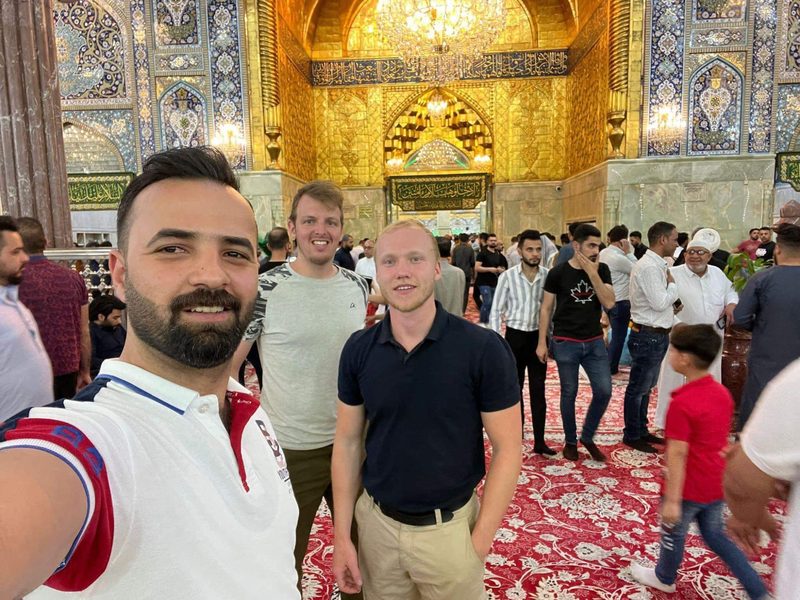
This isn’t an upsell. It’s part of what you get when you book a custom private tour or any other tour with me. I’ve done this hundreds of times and I’d rather spend 10 minutes helping you get it right than have you arrive at the airport with the wrong visa.
Frequently Asked Questions
Can I extend my visa in Iraq?
Yes, but it’s not straightforward. Visa extensions require a visit to the residency office in the city where you’re staying, paperwork in Arabic, and patience. The process can take a full day and approval isn’t guaranteed. If you think you might want to stay longer, it’s better to apply for the Ordinary visa (60-day validity) rather than the Visit visa (30-day stay). I can advise on realistic timeframes when we plan your itinerary.
What if my eVisa is rejected?
First, check the rejection reason — the portal usually gives a brief explanation. Most rejections are due to photo issues, blurry document scans, or incomplete information. Fix the specific problem and reapply. You will need to pay the fee again, which is why getting it right the first time matters. If you’re stuck, send me the rejection notice and I’ll help you figure out what went wrong.
Do I need a visa for a layover or transit?
If you’re transiting through Baghdad or Basra airports and staying in the transit area without going through immigration, you generally don’t need a visa. However, Iraqi airports are not major transit hubs, so genuine transit situations are rare. If you’re leaving the airport for any reason — even briefly — you need a valid visa. Don’t risk it without one.
Can I enter Kurdistan with a federal eVisa?
Yes. The federal eVisa covers all of Iraq, including the Kurdistan region. You can fly into Erbil or Sulaymaniyah with a federal eVisa and also travel freely to Baghdad, Babylon, Basra, and everywhere else. This is why I recommend the federal eVisa for almost everyone.
Can I enter federal Iraq with a Kurdistan eVisa?
Not with the standard Kurdistan eVisa from visit.gov.krd — that visa covers Kurdistan only. However, if you applied through evisa.iq and checked “Yes” on the Kurdistan Region entry authority box, your visa does cover federal Iraq as well (you’ll have paid the additional 100,000 IQD at the airport). The easiest way to tell: if your eVisa PDF has a blue border and says “Kurdistan Region of Iraq,” you checked the box and you’re covered for all of Iraq. If you only have a Kurdistan eVisa from visit.gov.krd, the checkpoint into federal Iraq will turn you back.
Is the visa on arrival still available?
No. Iraq suspended visa on arrival in March 2025. You must have a valid eVisa or embassy visa before you arrive. There is currently no indication of when — or if — visa on arrival will be reinstated. Do not rely on outdated information from older blog posts or forums that still mention VOA as an option.
Ready to plan your Iraq trip?
Not sure which tour fits your dates and interests? Answer 5 quick questions and get a personalised recommendation.
Read the complete Iraq travel guide for everything else you need to know — from what to pack to the best time of year to visit.