Is Iraq safe to visit? I get asked this question every single day — by email, on WhatsApp, in Instagram DMs. It’s always the first thing people want to know, and I understand why. The Iraq you’ve seen on the news for the last twenty years doesn’t look like a place you’d take a holiday.
But I was born near Babylon and I live in Baghdad. I’ve guided over 200 travellers through this country — Americans, Europeans, Australians, solo women, retired couples, photographers, history nerds. Not one of them has had a security incident on my watch. Not one.
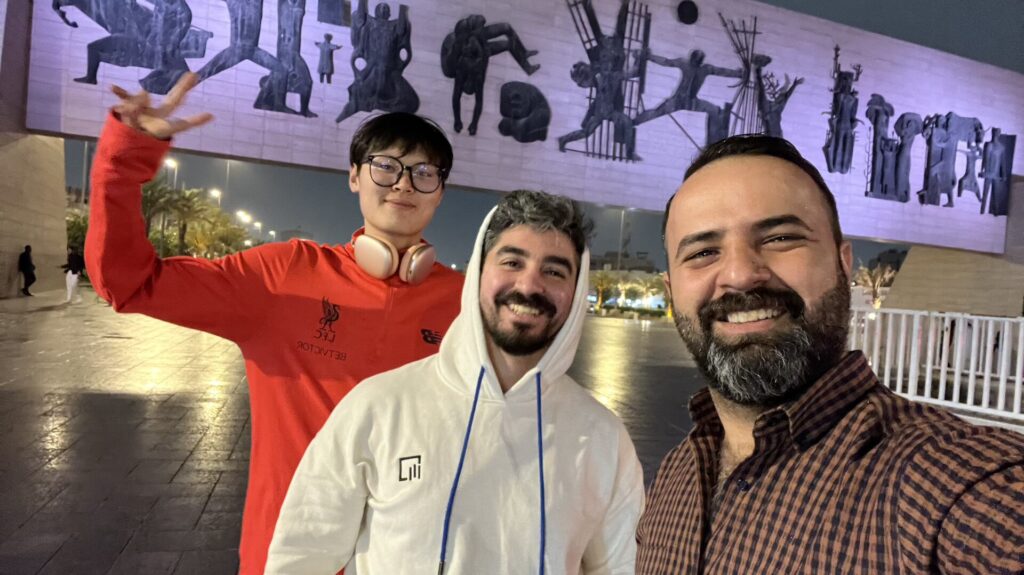
This isn’t a tourism board sales pitch. I’m going to give you an honest, region-by-region breakdown of what traveling in Iraq actually looks like in 2026 — what’s genuinely safe, what needs a guide, and what areas I won’t take you to. If you’re thinking about visiting, you can also explore Iraq tours I run throughout the year.
The Short Answer
Yes — for the regions tourists visit, Iraq is safe.
I know that sounds surprising, so let me give you some numbers. In 2024, 892,000 international tourists visited Iraq. That’s not aid workers or military contractors — those are tourists. People coming to see Babylon, walk through the marshes of southern Iraq, eat masgouf in Baghdad, and explore the ancient citadel of Erbil.
In March 2021, Pope Francis visited Iraq. He went to Baghdad, Ur, Erbil, and Mosul. The Vatican — not exactly known for recklessness — assessed the country and decided their Pope would be safe here. That visit changed how many people see Iraq.
And in 2026, Baghdad has been named Arab Tourism Capital by the Arab Tourism Organization. This isn’t just a title — it comes with infrastructure investment, international events, and a real push to welcome visitors. The Iraq I’m showing guests today is not the Iraq you saw on CNN in 2006.
That said, Iraq is a big country and not every part of it is the same. Let me break it down.
Safety Region by Region
Iraq is roughly the size of California. Just like you wouldn’t judge all of California by one neighbourhood in one city, you can’t paint Iraq with a single brush. Here’s what each region actually looks like for travellers.
Baghdad — Safe With Awareness
I live in Baghdad. I eat dinner on the street at 10pm. I take guests to the copper market, the book street on Mutanabbi, the cafés along Abu Nawas — and the biggest risk is eating too much.
Baghdad is a city of 8 million people. The tourist areas — Kadhimiya, the National Museum, the old city — are well-patrolled and full of ordinary Iraqis going about their lives. You’ll see families, students, couples. It looks nothing like what most foreigners expect.
“Safe with awareness” means the same thing it means in Cairo, Mexico City, or Johannesburg. Don’t flash expensive jewellery in a crowded market. Don’t wander unfamiliar neighbourhoods alone at 2am. Be aware of your surroundings. These are common sense rules for any large city on Earth.
When I run my Baghdad city tour, we spend the day moving through the city — traffic is the biggest headache, not security. My guests walk through markets, drink tea with shopkeepers, and visit mosques. Every single one of them tells me the same thing afterwards: “This is nothing like what I expected.”
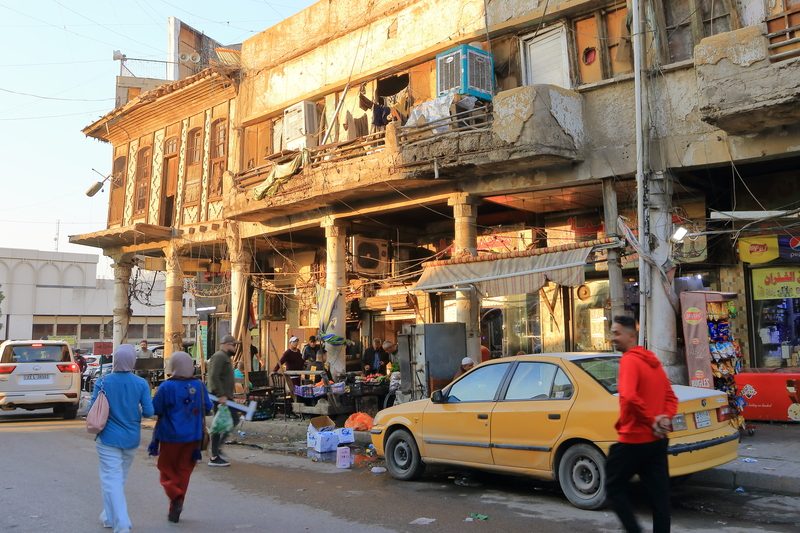
Babylon, Karbala & Najaf — Very Safe
The area south of Baghdad — Babylon, Karbala, Najaf — is one of the safest parts of Iraq. Millions of pilgrims visit Karbala and Najaf every year, and the security infrastructure reflects that. These cities are locked down in the best possible way.
Babylon itself is a UNESCO World Heritage Site and an active archaeological area. It’s calm, well-managed, and sees a steady stream of international visitors. The drive from Baghdad takes about 1.5 hours, and we pass through one checkpoint outside Hillah — it takes about 2 minutes and I handle the paperwork.
Karbala and Najaf are shrine cities. The atmosphere is reverent and welcoming. Even as a non-Muslim visitor, you’ll be greeted warmly. People will offer you tea, ask where you’re from, and want to take photos with you. I’ve taken Christian, Jewish, and atheist guests to these cities, and every one of them has felt welcome.
Southern Iraq & The Marshes — Safe and Remote
Southern Iraq — Nasiriyah, Ur, the Mesopotamian Marshes, Basra — is safe. The risk here isn’t security. It’s logistics.
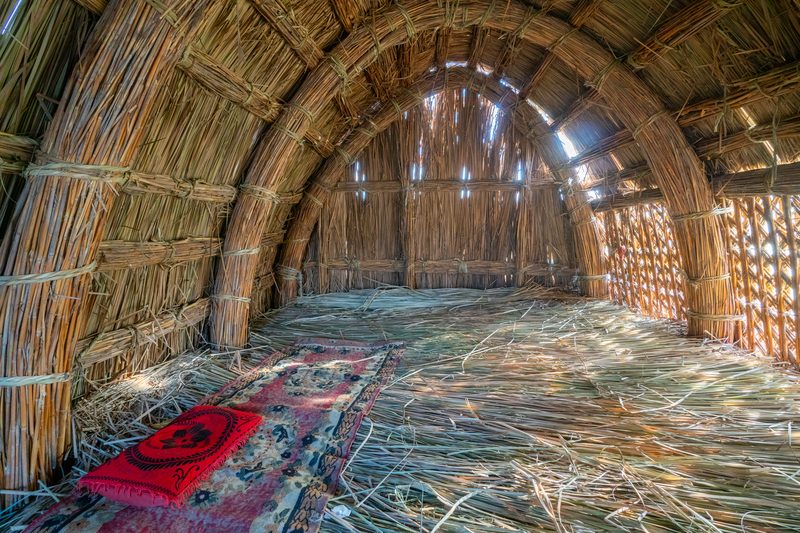
These areas are remote. Roads can be rough. Accommodation is basic outside of Basra. English speakers are rare. Without a local guide who knows the roads, the boat operators in the marshes, and the few decent hotels, you’ll struggle with logistics rather than safety.
The communities in the south are incredibly hospitable. The Marsh Arabs have been welcoming strangers into their mudhif (reed houses) for thousands of years. When I take guests into the marshes by boat, the locals invite us for tea and bread before we even ask. These are some of the warmest, most generous people I’ve met anywhere — and I say that as an Iraqi.
Mosul & Northern Iraq — Rebuilding, Safe With a Guide
I’ll be honest: Mosul was devastated. Parts of the Old City still show the scars of the battle against ISIS that ended in 2017. If you visit, you will see destruction.
But you’ll also see reconstruction happening in real time. The Al-Nouri Mosque and its famous leaning minaret are being rebuilt with UNESCO support. New businesses are opening. Young people are coming back. The city has a resilience that’s hard to describe until you see it.
Hatra — the Parthian fortress in the desert south of Mosul — is accessible again and one of the most striking archaeological sites in the Middle East. Few tourists make it there, which means you’ll often have the ruins nearly to yourself.
Mosul is not a place for independent travel right now. But with a guide who knows the area, the checkpoints, and the current situation on the ground, it’s a powerful and safe place to visit.
Kurdistan (Erbil, Sulaymaniyah, Duhok) — Safest Region
Is Kurdistan safe? Yes — and it’s the easiest entry point into Iraq, with a security environment comparable to Jordan or Oman. Many travellers are surprised to find it feels more relaxed than parts of Turkey.
Erbil’s citadel is a UNESCO site and the city has modern malls, international restaurants, and a well-developed tourism infrastructure. Sulaymaniyah is the cultural capital — more liberal, full of cafés and art galleries. Duhok sits in green mountains that look nothing like the desert Iraq most people imagine.
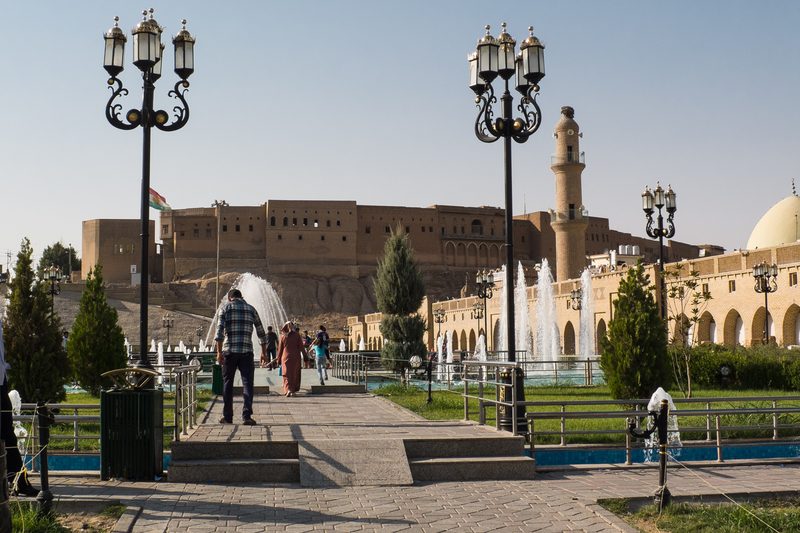
You can explore Kurdistan independently. English is more widely spoken, signage is bilingual, and the security situation has been stable for over a decade. For first-time visitors who want to ease into Iraq, I often recommend starting here with a Kurdistan tour before heading south to federal Iraq.
Areas to Avoid
I won’t pretend all of Iraq is safe. There are areas I don’t go, and I won’t take guests there.
Western Anbar Province — the desert area near the Syrian border — is not stable enough for tourism. Some areas near the Iranian border in the northeast can be affected by cross-border tensions. And there are a few remote tribal areas in the deep south that simply have no tourism infrastructure.
To be specific: this is maybe 15% of Iraq’s territory. The other 85% — including every site tourists actually want to see — ranges from very safe to perfectly safe with a guide. When people hear “Iraq is dangerous,” they’re applying the reality of a small number of border zones to an entire country. It’s like judging all of the United States by the crime rate of one neighbourhood in one city.
What About the Travel Advisories?
Let’s address this directly, because it stops more people than anything else.
The US State Department rates Iraq as Level 4 — “Do Not Travel.” The UK FCDO advises against all travel to most of Iraq and all but essential travel to Kurdistan. These are facts. I’m not going to tell you to ignore your government.
But I am going to tell you what I see every day.
These advisories are blanket warnings. They don’t distinguish between downtown Baghdad — where I eat dinner on the street every night — and a remote stretch of the Syrian border. They cover Iraq as one unit, the same way they cover the entire country of Colombia, Ethiopia, or Pakistan. All of those countries now have thriving tourism industries, despite carrying the same “Do Not Travel” warning.
The advisories exist because governments must account for worst-case scenarios. They can’t say “Baghdad is fine but avoid this specific area of Anbar” — their legal liability requires the broadest possible warning. That’s their job.
My job is different. My job is to tell you what’s actually happening on the ground, every day, because I live here. And what I see is tourists having incredible experiences, going home safely, and telling their friends to visit.
If you’re still unsure, that’s completely fair. You can read the complete Iraq travel guide I’ve written, which covers everything from what to pack to how the country works on the ground. And when you’re ready, I’ve put together a step-by-step walkthrough on how to get your Iraq visa — including the new eVisa system.
What Do Checkpoints Actually Look Like?
This is something almost no travel blog covers properly, and it’s one of the biggest unknowns for first-time visitors. So let me walk you through it.
In federal Iraq (outside Kurdistan), you’ll encounter military and police checkpoints on highways and at the entrance to most cities. They’re part of daily life — Iraqis pass through them every single day without a second thought.
Here’s what actually happens. We pull up to the checkpoint. A soldier or policeman approaches the car. I greet him in Arabic, hand over my guide licence and your passport. He looks at the documents, maybe asks where we’re going. Sometimes he asks you where you’re from — not suspiciously, usually just curious. “America? Welcome to Iraq!” is something my guests hear regularly.
The whole interaction takes 1 to 3 minutes. Occasionally longer if they want to check the boot of the car. That’s it.
You need to carry your passport at all times. I also carry copies of the travel permits I arrange in advance for certain areas. I know which checkpoints to expect on every route I drive, and I know many of the soldiers personally from driving the same roads for years.
The soldiers are not hostile. They’re doing a job, and foreign tourists are — honestly — the most interesting part of their day. I’ve had checkpoint soldiers ask for selfies with my guests more times than I can count.

Is Iraq Safe for Solo Travellers?
The short answer: with a guide, yes. Without a guide, it depends on the region.
Kurdistan is genuinely doable as an independent solo traveller. Erbil and Sulaymaniyah have hostels, English signage, Uber-style apps, and a relaxed security environment. Many solo backpackers explore Kurdistan on their own without issues.
Federal Iraq — Baghdad, Babylon, the south, Mosul — is a different story. It’s not that it’s dangerous, but the practical barriers are significant. Arabic is essential for checkpoints. Navigation is confusing. Some areas require travel permits. And there’s no tourist infrastructure in the way you’d find in, say, Turkey or Egypt.
A local guide isn’t about protection in the bodyguard sense. It’s about having someone who speaks the language, knows the roads, handles the bureaucracy, and opens doors that would be closed to you on your own. When you travel with a guide, checkpoint soldiers wave you through faster, restaurant owners bring out their best dishes, and locals invite you into their homes because they trust the person you’re with.
Is Iraq Safe for Women?
Yes — with cultural awareness and respect for local customs.
I’ve guided dozens of women through Iraq — solo female travellers, women in couples, and women in groups. Every one of them has felt safe. But I won’t pretend the culture is identical to Western Europe or North America. Understanding the dress code and social norms goes a long way.
In Baghdad and the south, dress modestly. Long sleeves, trousers or a long skirt, nothing low-cut. You don’t need to wear a headscarf in most areas, but carrying one is wise. In Karbala and Najaf, you’ll need an abaya (a loose black robe) to enter the shrine areas — they’re available to borrow or buy cheaply outside the shrines.
In Kurdistan, the dress code is more relaxed. You’ll see Kurdish women in jeans and t-shirts in Sulaymaniyah. Erbil is slightly more conservative but still far more relaxed than the south.
The biggest thing my female guests report is not harassment — it’s overwhelming hospitality. Women in markets want to chat, children want to practise their English, and families want to take photos together. One of my Australian guests told me she felt safer walking through Baghdad’s Kadhimiya district than she did walking through parts of Melbourne at night.
For a deeper look at this topic, I’ve written a dedicated guide to solo female travel in Iraq with specific advice and guest stories.
How I Keep My Guests Safe
Safety isn’t something I leave to chance. It’s the foundation of every trip I run.
I drive vetted routes that I know inside out. I don’t take shortcuts through unfamiliar areas. Every itinerary is planned around current conditions — not the conditions from six months ago. I check in with my network of local contacts across the country before every trip.
I handle all checkpoint paperwork and travel permits in advance. You carry your passport — I carry everything else. If anything changes on the ground — a road closure, a local event, unexpected security — I have backup routes and backup plans.
From the moment you book, you have my personal WhatsApp. Not a call centre. Not an office number. My phone. If you have a question at 2am, I answer it. If something happens during your trip, I’m right there with you — not in an office somewhere.
When you travel with a local guide, you’re not a random tourist navigating a complex country alone. You’re Ali’s guest. And in Iraq, being someone’s guest means something. It means my community looks out for you. It means doors open. It means you’re safe — because your safety is my personal responsibility.
Still have questions about safety?
I know this is a big decision. If you’re on the fence, message me — I’ll answer honestly. No sales pitch, just the truth about what visiting Iraq is like right now.
What Guests Actually Say
I can tell you Iraq is safe all day long — but you’ll probably trust the people who’ve already been here. These are real reviews from real guests.
Sarah, United States: “I was terrified before I went. My family thought I was crazy. By day two, I was completely relaxed. Baghdad felt safer than many cities I’ve visited in Latin America. Ali was with us the entire time and nothing ever felt uncertain.”
Thomas, Germany: “The checkpoints were the thing I was most nervous about, and they turned out to be the most uneventful part of the trip. Soldiers smiled, asked where we were from, and waved us through. Ali handled everything.”
Priya, United Kingdom: “As a solo woman of Indian origin, I wasn’t sure what to expect. Honestly? The warmth from Iraqi people was overwhelming. Women in the markets held my hand, shared food with me, wanted to know everything about my life. I never once felt unsafe.”
Frequently Asked Questions
Is Iraq safe for American tourists?
Yes. I’ve guided dozens of American travellers through Iraq — it’s actually one of my most common guest nationalities. Americans are welcomed warmly by ordinary Iraqis. You’ll hear “Welcome!” more than any other word. At checkpoints, American passports are processed smoothly. The US travel advisory is a blanket Level 4 warning that doesn’t distinguish between a Baghdad restaurant district and a remote border area. The Iraq that tourists visit — Baghdad, Babylon, Kurdistan, the southern marshes — is safe and welcoming for Americans.
Do I need a bodyguard to visit Iraq?
No. This is one of the most common misconceptions and it comes from outdated ideas about Iraq. You don’t need a bodyguard, armoured vehicle, or security detail. What you need is a knowledgeable local guide who speaks Arabic, knows the roads, and handles the logistics. That’s what I provide. My guests travel in a normal car, walk through markets on foot, eat in local restaurants, and interact freely with people. There’s no visible security because there’s no need for it in the areas we visit.
Is it safe to walk around Baghdad at night?
In tourist and residential areas, yes. I regularly take guests to riverside restaurants and tea houses in the evening. Abu Nawas Street along the Tigris is lively after dark — families, couples, street food vendors. The areas around Kadhimiya and Karrada are busy and well-lit. I wouldn’t recommend wandering unfamiliar outer neighbourhoods alone at 2am — the same advice I’d give for any major city. But the idea that Baghdad shuts down after dark or becomes dangerous is simply not true.
What happens if there’s a regional incident while I’m in Iraq?
This is a fair question, and I take it seriously. If there’s a regional escalation — tensions with a neighbouring country, for example — I adjust in real time. I’m in constant contact with local sources across the country. If we need to change a route, skip a region, or stay an extra day somewhere safe, we do it immediately. In a serious scenario, Kurdistan has international airports with direct flights to Istanbul, Dubai, and Amman. I’ve never had to evacuate a guest, but I always have a contingency plan. Your safety is personal to me — and I don’t take that lightly.
Is traveling in Iraq safe for tourists?
Yes — for the regions tourists visit, traveling in Iraq is safe. Baghdad, Babylon, Karbala, Najaf, the Mesopotamian Marshes, and Kurdistan are all accessible and welcoming. The key is having a guide who knows the roads, speaks Arabic, and handles the logistics. Every region I take guests to has been chosen because I can guarantee a safe experience there.
Is Kurdistan safe to visit independently?
Yes — Kurdistan is the most independent-travel-friendly region in Iraq. Erbil and Sulaymaniyah have hostels, English signage, and ride-sharing apps. The security situation has been stable for over a decade. Many solo travellers explore Kurdistan on their own before joining a guided tour into federal Iraq. If you’re new to the region, starting with a Kurdistan tour is a great way to ease in.
Ready to start planning your Iraq trip?
Not sure which tour fits your interests and how many days you have? Answer 5 quick questions and get a personalised recommendation.
Read the complete Iraq travel guide for everything else you need to know — from what to pack to the best time of year to visit.