The Ziggurat of Ur is over 4,000 years old and still standing. Built around 2100 BCE by the Sumerian King Ur-Nammu and completed by his son Shulgi, it is one of the oldest and best-preserved monumental structures on Earth. In March 2021, Pope Francis stood at its base and held an interfaith prayer service — the first papal visit to Iraq in history. That single moment put Ur back on the map for a new generation of travellers. But for anyone interested in where civilisation began, this site has always been essential.
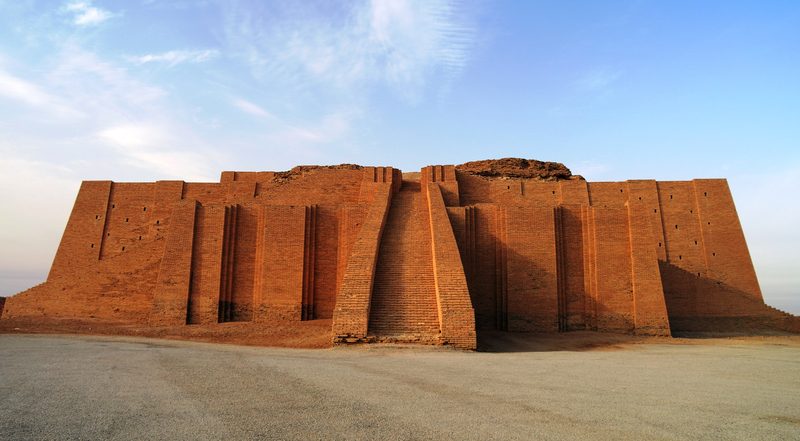
Ur sits in the desert of southern Iraq near the city of Nasiriyah, in Dhi Qar Province. It is the traditional birthplace of the Prophet Abraham — Ibrahim — the patriarch shared by Judaism, Christianity, and Islam. The site was inscribed as a UNESCO World Heritage Site in 2016, as part of the broader Ahwar of Southern Iraq listing. I include Ur on most of my southern Iraq itineraries, and it consistently ranks among the most powerful stops on any trip. For a wider view, see my Iraq travel guide.
History of Ur
Ur was one of the earliest cities in human history. Settled as far back as around 4000 BCE, it grew into a major Sumerian city-state and, under the Third Dynasty of Ur in the 21st century BCE, became the capital of an empire controlling much of Mesopotamia. At its peak, Ur was a centre of administration, religion, trade, and culture — one of the most important cities in the ancient world.
The city is closely associated with the Prophet Abraham (Ibrahim), who according to Jewish, Christian, and Islamic tradition was born here before migrating to Canaan. This connection gives Ur a significance that extends far beyond archaeology — it is a place of origin for three of the world’s great faiths, and that is precisely why Pope Francis chose it for his interfaith gathering in 2021.
Ur was also the site of one of the most spectacular archaeological discoveries of the 20th century. In the 1920s and 1930s, British archaeologist Leonard Woolley excavated the Royal Cemetery and uncovered tombs dating to around 2600–2500 BCE, filled with gold jewellery, lapis lazuli ornaments, lyres, weapons, and the remains of servants buried alongside their rulers. The treasures were divided between the British Museum in London, the University of Pennsylvania Museum in Philadelphia, and the Iraq Museum in Baghdad. Queen Puabi’s intact tomb, with its golden headdress and cylinder seal, remains one of the iconic finds in the history of archaeology.
What You Will See Today
The Ziggurat
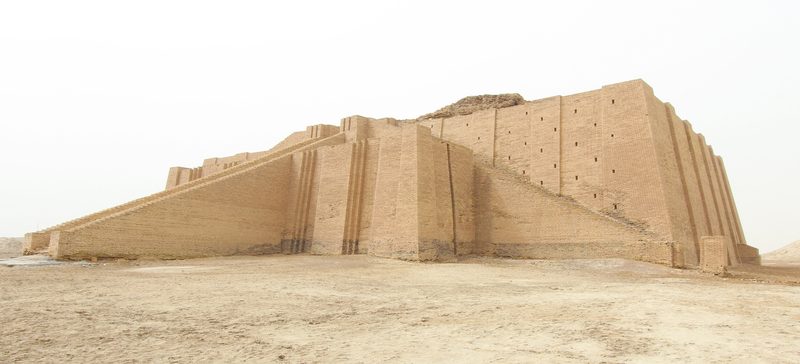
The ziggurat is the centrepiece of the site and the reason most people come. Originally a three-tiered step pyramid dedicated to Nanna, the Sumerian moon god, it measured roughly 64 metres long, 45 metres wide, and stood over 30 metres tall. Three monumental staircases converged at a gate on the first terrace, leading up to a temple at the summit.
What you see today is partly original and partly reconstructed. The lowest tier — the massive mud-brick core — dates to Ur-Nammu’s original construction around 2100 BCE. The structure crumbled over the millennia and was restored once in antiquity by the Babylonian King Nabonidus in the 6th century BCE. In the 1980s, Saddam Hussein ordered a reconstruction of the facade and the grand staircase, which is why the lower portion looks so solid and well defined today. You can climb the central staircase to the first terrace. The views from the top — flat desert in every direction, the ruins of the ancient city below — give you a visceral sense of how this structure must have dominated the landscape for the people of Ur.
The Royal Cemetery Site
Near the ziggurat, the area where Woolley excavated the Royal Cemetery is marked and accessible. There is not much to see physically — the treasures are in museums and the tombs themselves are excavated pits — but knowing what was found here adds enormous weight to the visit. This is where Woolley uncovered Queen Puabi’s golden headdress, the Bull-Headed Lyre, the Standard of Ur, and the evidence of ritual human sacrifice that stunned the world in the 1920s. If you have visited the Iraq Museum in Baghdad or the British Museum in London, standing at the source of those objects is a powerful experience.
The Residential Ruins
Woolley also uncovered the foundations of residential houses dating to around 2000 BCE, giving a rare glimpse into everyday Sumerian life. The street layout, house foundations, and drainage systems are still visible, and they show a surprisingly sophisticated urban plan. These are easy to overlook in favour of the ziggurat, but they reward a slow walk if you have time.
Abraham’s House
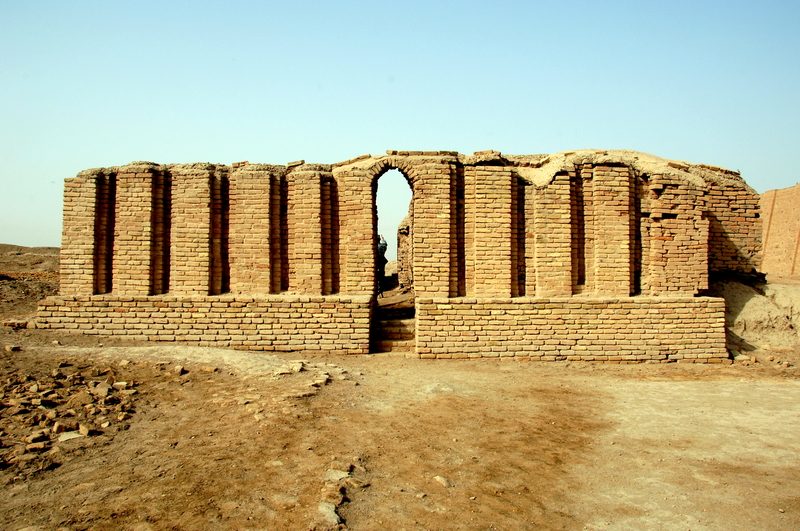
Near the ruins, a partially reconstructed building is traditionally identified as the House of Abraham — the place where Ibrahim is believed to have lived before his journey to Canaan. The identification is based on later religious tradition rather than direct archaeological evidence, but the site is marked and was the location where Pope Francis held his interfaith prayer in 2021. Whether you come to it as a matter of faith or of historical curiosity, it is a significant stop.
The Pope’s Visit (March 2021)
On 6 March 2021, Pope Francis visited the ancient city of Ur as part of the first-ever papal trip to Iraq. Standing at the House of Abraham, he held an interfaith prayer service with Muslim, Christian, Yazidi, Sabean, and other religious leaders — a deliberate gathering at the place where the Abrahamic faiths trace their common origin. It was an extraordinary moment: the head of the Catholic Church, in the middle of the southern Iraqi desert, calling for coexistence at the birthplace of Abraham.
The visit was a turning point for Iraqi tourism. It brought global media attention to a site that most people outside Iraq had never heard of, and it signalled that southern Iraq was accessible and visitable. The exact spot where the Pope prayed is now marked, and it has become a point of interest in its own right — particularly for Christian pilgrims. A visitor centre development called Ur Tourist City is being built adjacent to the site to accommodate the growing interest.
Practical Information
Location and Getting There
Ur is located about 16 kilometres southwest of Nasiriyah in Dhi Qar Province, southern Iraq. From Najaf, it is roughly a three to four hour drive. From Baghdad, it is five to six hours. Most visitors come to Ur as part of a southern Iraq itinerary that also includes the Mesopotamian Marshes and often Basra. On my tours, I handle all transport and logistics — you do not need to worry about navigation or access.
Time Needed
Allow one to two hours for the site. That gives you time to climb the ziggurat, walk through the ruins, see the Royal Cemetery area, visit Abraham’s House, and take it all in. If you are particularly interested in archaeology, you could spend longer.
Entrance Fee
There is a small entrance fee for foreign visitors. Amounts can change, so I confirm the current fee before each visit. It is nominal.
The Military Airbase
Ur sits on the edge of the Tallil Air Base (now known as Imam Ali Air Base), one of the largest military installations in Iraq. The proximity of the base is the reason the site was never looted — but it also means there are military facilities nearby. Do not photograph anything military. No cameras pointed at the base, the perimeter, or any military vehicles or personnel. This is taken seriously. Keep your photography focused on the archaeological site itself.
Combining Ur With Other Sites
Ur pairs naturally with the Mesopotamian Marshes, which are about two hours further south. Most of my guests visit Ur in the morning and continue to the Marshes in the afternoon, or vice versa. It also works well alongside Babylon as part of a broader tour of Iraq’s ancient sites. For the full southern itinerary, see my Southern Iraq tour.
Ur is included in both the Southern Iraq Tour and the Complete Iraq Tour.
Climbing a 4,000-year-old ziggurat and standing where Abraham began his journey — there is nothing else like it.
Frequently Asked Questions
Can you climb the Ziggurat of Ur?
Yes. You can walk up the reconstructed central staircase to the first terrace. The climb is straightforward and the views from the top across the desert and ruins are impressive.
Is the Ziggurat of Ur a UNESCO World Heritage Site?
Yes. Ur was inscribed in 2016 as part of “The Ahwar of Southern Iraq,” a UNESCO World Heritage Site that also includes the ancient cities of Uruk and Tell Eridu alongside the Mesopotamian Marshes.
Where are the treasures from the Royal Tombs of Ur?
The artefacts were divided between the British Museum in London, the University of Pennsylvania Museum in Philadelphia, and the Iraq Museum in Baghdad. Queen Puabi’s golden headdress and the Standard of Ur are among the most famous objects.
How far is Ur from Baghdad?
About 375 kilometres, roughly five to six hours by road. Most visitors reach Ur from Nasiriyah or as part of a southern Iraq tour that includes the Marshes.