I was born near Babylon. As a kid, I used to play among ruins that are older than Rome, older than Athens, older than almost anything still standing on Earth. The Lion of Babylon was my landmark — I could see it from the road and know I was almost home.
Visiting Babylon today isn’t like visiting the Pyramids or the Colosseum. There are no crowds, no souvenir shops, no ropes and audio guides. It’s quieter than that, and in some ways more powerful. You’re walking through the remains of a city that invented writing, codified law, and built structures the ancient world called wonders — and you might be the only tourist there.
This guide covers what you’ll actually see at Babylon, what to expect, and how to make the most of your visit — including Borsippa, Saddam’s abandoned palace, and the practical details most guides skip.
A Brief History of Babylon
Babylon’s peak came under Nebuchadnezzar II (604–562 BC), who transformed it into the largest and most magnificent city in the ancient world. This is the Babylon of the Bible, of the Ishtar Gate, of the Hanging Gardens. At its height, it may have had 200,000 residents — enormous for the era.
But Babylon’s history stretches much further back. The city was already important under Hammurabi around 1792 BC, who wrote the world’s first known legal code here. It was conquered by Persians, visited by Alexander the Great (who died here in 323 BC), and eventually abandoned as the rivers shifted and new empires built new capitals.
What matters for your visit is this: Babylon isn’t just old. It’s foundational. This is where urban civilisation as we know it took shape. When you walk the Processional Way, you’re walking where humanity first figured out how to build a city that could last.
What You’ll Actually See at Babylon Today
I want to be honest with you. Babylon is not Petra. It’s not Pompeii. Thousands of years, wars, looting, and Saddam-era reconstruction have changed the site dramatically. If you come expecting towering intact structures, you’ll be disappointed. If you come understanding what you’re standing on — and with someone who can bring it to life — it’s one of the most moving places on Earth.
The Ishtar Gate (Replica) — And Where the Real One Is
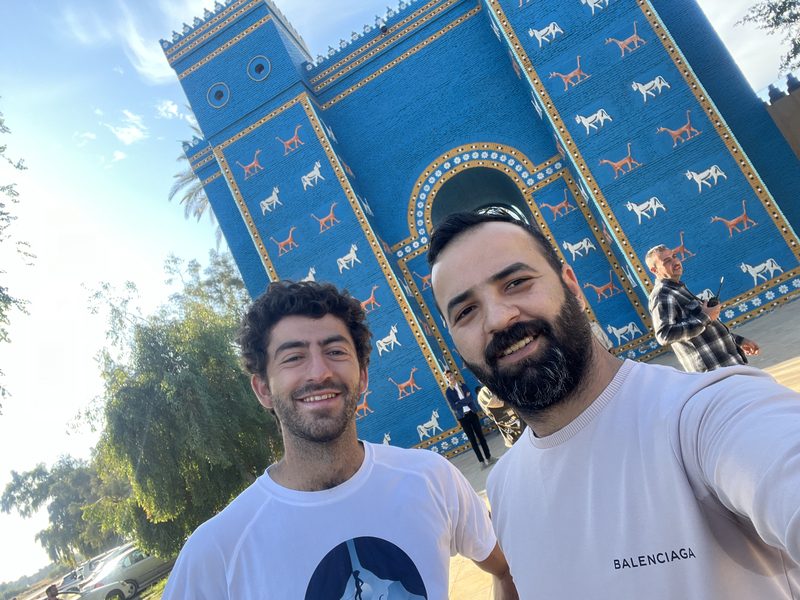
The first thing you’ll see at Babylon’s entrance is a reconstruction of the Ishtar Gate — blue-glazed bricks decorated with bulls and dragons, built to honour the goddess Ishtar. It’s impressive, but it’s a replica.
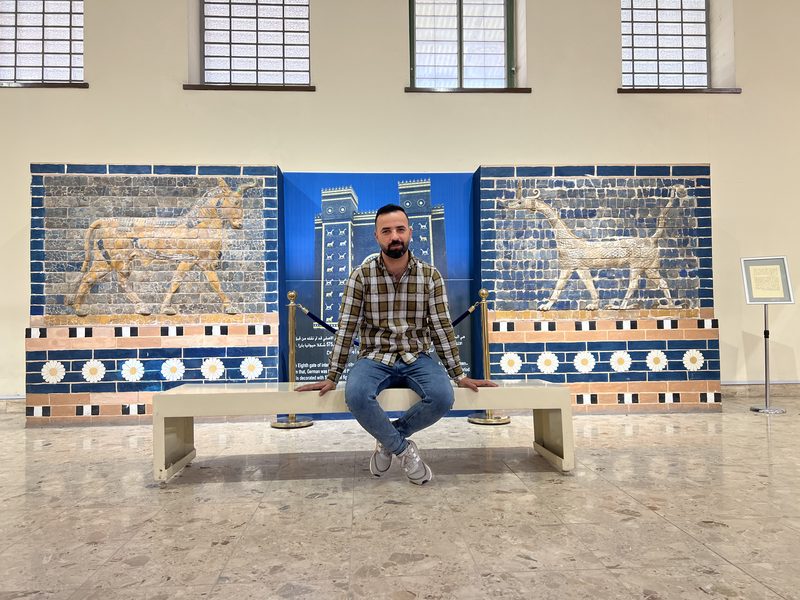
The real Ishtar Gate is in Berlin’s Pergamon Museum. German archaeologists excavated it in the early 1900s and shipped it to Germany piece by piece. It’s a stunning display in Berlin — and a sore point for many Iraqis. I have mixed feelings about it every time I bring it up. On one hand, the Germans preserved it beautifully. On the other, it belongs here.
The replica at Babylon gives you a sense of the scale and colour, but standing in front of the original in Berlin — which I’ve visited — is a different experience entirely. I always tell my guests: if you ever go to Berlin, visit the Pergamon. Then come back here and imagine it in its original setting.
The Processional Way
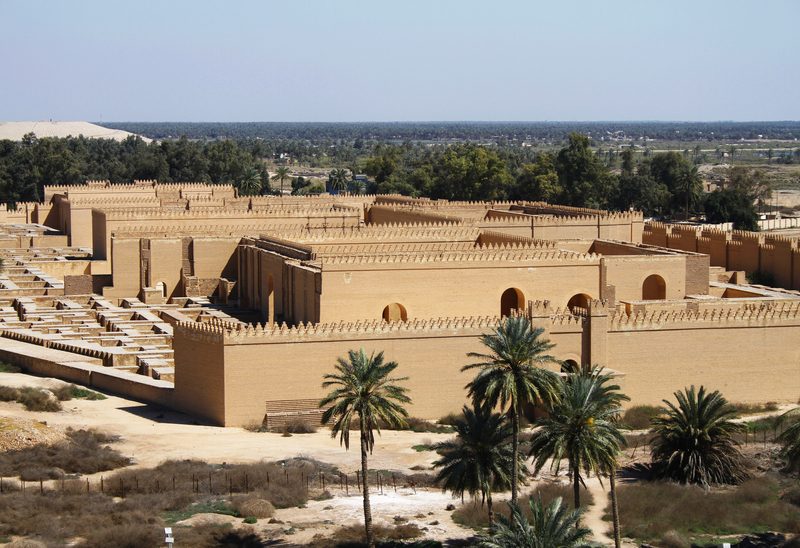
Behind the gate, the Processional Way stretches into the site — the ancient road along which religious processions would have marched during the New Year festival. The original walls were lined with glazed brick lions, 120 of them, in vivid blue and gold.
Today the walls are partially reconstructed. You can still see the pathway’s original layout and get a real sense of the scale. Walking it is one of those quiet, powerful moments — there’s no noise, no crowds, just you and 2,600 years of history under your feet. I usually slow down here and give my guests time to take it in.
Nebuchadnezzar’s Throne Room & Palace
The Southern Palace of Nebuchadnezzar included the throne room where the king would have received visitors and conducted affairs of state. What remains is largely foundation walls — you need to use your imagination, and a guide helps enormously here.
The throne room’s original façade was decorated with the same glazed bricks you see on the Ishtar Gate — lions, bulls, and floral patterns in blue, yellow, and white. Fragments are in museums around the world. What’s on site today is the footprint: you can trace the rooms, understand the layout, and picture the scale of a palace that once amazed the ancient world.
The Lion of Babylon
This is my favourite spot at Babylon and the one I always save for a moment of personal storytelling with my guests. The Lion of Babylon is a 2,600-year-old basalt statue of a lion standing over a human figure. It’s been here, in the open, for millennia. No glass case, no velvet rope. You can walk right up to it.
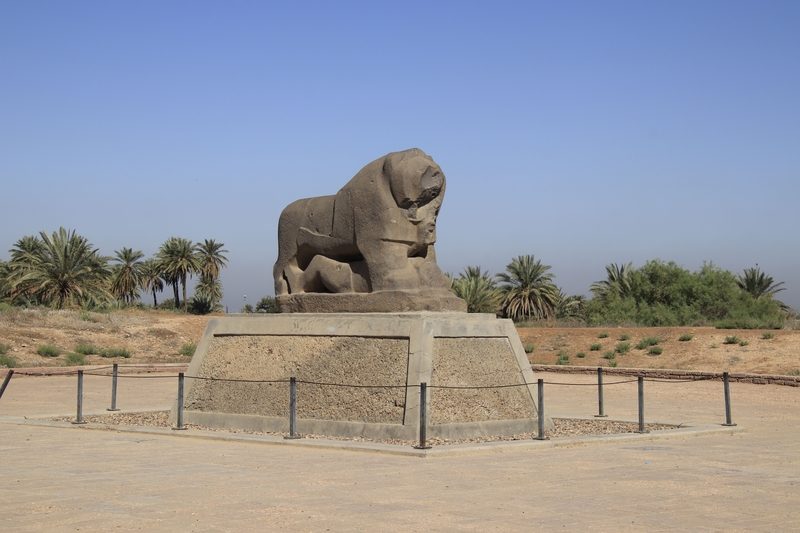
The lion is a symbol of Babylon and appears on everything from Iraqi currency to government logos. It’s weathered and worn, but there’s something extraordinary about standing next to a sculpture that has survived everything this land has been through — empires, invasions, wars — and is still here, still looking ready to pounce.
What About the Hanging Gardens?
I get asked about this on almost every tour, so I’ll be straight: the Hanging Gardens were probably not at Babylon. Most contemporary scholars believe they were either at Nineveh (near modern Mosul), were a literary invention, or were greatly exaggerated by ancient writers who never visited themselves.
There’s no archaeological evidence of the gardens at Babylon. Some guides will point to a spot and say “this is where they were.” I don’t do that. I think honesty is more interesting than a comfortable myth — and the real history of Babylon is extraordinary enough without inventing things.
Saddam’s Palace at Babylon
On a hill overlooking the ruins sits one of Saddam Hussein’s presidential palaces — an enormous, gaudy structure built in the 1980s directly on top of the archaeological site. Its construction damaged ancient layers and is one of the reasons UNESCO initially hesitated to grant Babylon World Heritage status (it was eventually inscribed in 2019).
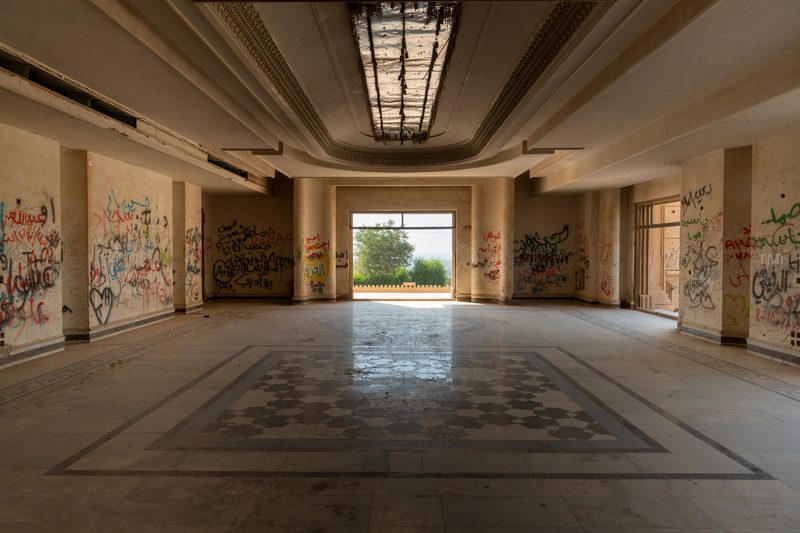
Today the palace is abandoned. The interiors are stripped, the walls covered in graffiti left by soldiers from various eras. The marble is cracked, the chandeliers gone. It’s eerie and fascinating in equal measure.
But the real reason to go up there is the view. From the palace terrace, you can see the entire Babylon site spread below you, the Euphrates river in the distance, and the flat Mesopotamian plain stretching to the horizon. It’s the best vantage point for understanding the scale of what Babylon once was.
Most tour groups skip the palace or mention it in passing. I always take my guests up. It’s part of Iraq’s story — not just the ancient part, but the modern part too. You can’t understand this country without understanding all of its layers.
Borsippa — The “Real” Tower of Babel
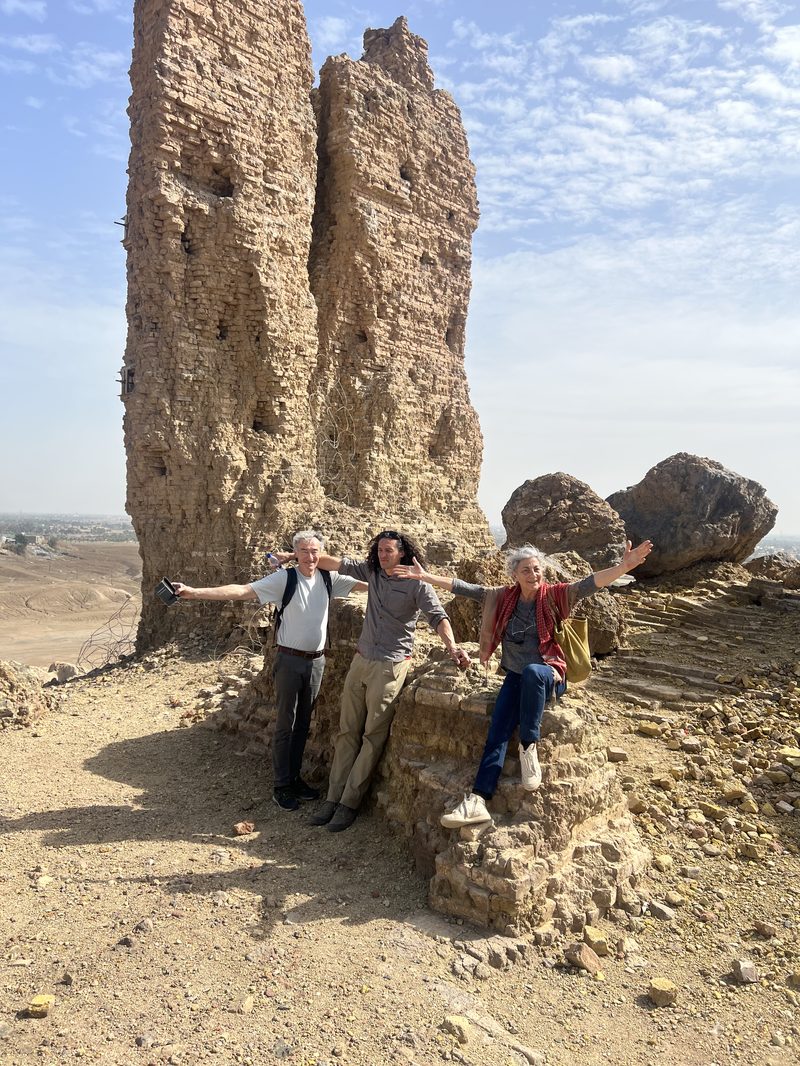
Twenty minutes south of Babylon, sitting alone in the flat farmland, is the Birs Nimrud ziggurat at Borsippa. Almost no tourists come here — and that’s a shame, because many scholars believe this is the structure that inspired the biblical Tower of Babel legend.
The ziggurat is massive even in ruin. The vitrified (heat-fused) bricks at the top have led to centuries of speculation — some early travellers believed the blackened crown was caused by divine fire. In reality, it was likely a lightning strike or kiln effect, but the visual is dramatic enough to understand why the story stuck.
Borsippa is one of the things that sets my tour apart from others. Most Babylon day trips turn around at the main site. I always include Borsippa because it’s extraordinary, it’s empty, and it adds a layer to the Babylon visit that you can’t get anywhere else. You stand at the base of this thing and look up, and it feels ancient in a way that’s hard to describe — raw, unpolished, untouched by reconstruction.
Practical Information
How to Get to Babylon From Baghdad
Babylon is about 1.5 hours south of Baghdad by car, via the town of Hillah. The road is good and well-maintained. You’ll pass through one checkpoint on the approach to Hillah — it takes about 2 minutes and I handle the paperwork. If you’re already exploring Baghdad attractions, Babylon makes for a natural next stop.
There’s no public transport directly to the Babylon site. Shared taxis run to Hillah, but from Hillah to the ruins you’d need a local taxi. With a guide, it’s door-to-door. The question of is Iraq safe often comes up for this route — the highway south of Baghdad is one of the most well-patrolled roads in the country.
Entrance Fees
The entrance fee for Babylon is 25,000 IQD (~$19 USD) for foreign visitors. This covers the main archaeological site, including the Ishtar Gate replica, Processional Way, palace foundations, and the Lion. Saddam’s palace on the hill is accessible from within the site at no extra charge.
Borsippa has no formal entrance fee — it’s an open site in the countryside. When you travel with me, all entrance fees are included in the tour price.
Best Time to Visit
Go in the morning. The site is mostly open and unshaded, so by midday from April to October, the heat is punishing. I typically depart Baghdad at 7am and arrive at Babylon by 8:30am, which gives us the cooler morning hours for exploring.
Avoid Fridays if you can — it’s the Iraqi weekend and the site gets busier with local families and school groups. Weekday mornings, especially Tuesday to Thursday, are the quietest.
How Long to Spend
Plan 2-3 hours for Babylon itself (more if you’re a history enthusiast or photographer) and another 30-45 minutes for Borsippa. A combined visit including the drive from Baghdad, both sites, and lunch in Hillah takes roughly 8-9 hours door to door.
You can also combine Babylon with Karbala and Najaf for a longer day or overnight trip — the shrine cities are about an hour from Hillah. And if you’re spending time in the capital first, my Baghdad tour pairs naturally with a Babylon day trip the following day.
Can You Visit Babylon as a Day Trip?
Yes — it’s one of my most popular options. A typical day trip looks like this: depart Baghdad around 7am, arrive at Babylon by 8:30am, explore the site for 2-3 hours, drive to Borsippa (20 minutes), visit the ziggurat, have lunch in Hillah (the kebab here is some of the best in Iraq), and return to Baghdad by late afternoon.
Day trips to Babylon start from $120/person. If you want to extend it into a multi-day trip that includes Karbala, Najaf, and the southern marshes, my Babylon tour from Baghdad covers several options. I also build custom itineraries if you want to combine Babylon with other destinations on your own schedule.
Want to visit Babylon with a guide who grew up next door?
I was born near these ruins and I’ve been bringing visitors here for years. Day trips from Baghdad start at $120/person and include Babylon, Borsippa, and all entrance fees.
Frequently Asked Questions
Is Babylon worth visiting?
Yes — but manage your expectations. Babylon is not a perfectly preserved site like Petra or Pompeii. Much of what remains is foundations, partial walls, and reconstructions. The value of the visit comes from understanding what you’re standing on — this is where civilisation as we know it took shape. With a guide who can bring the history to life and show you the details most people miss, it’s one of the most meaningful historical visits you can make. Without context, it can feel underwhelming. Context is everything here.
Can you visit Babylon without a guide?
Technically, yes. The site is open to the public and you can walk around independently. But I’d strongly recommend against it for two reasons. First, there’s very little signage or interpretation on site — without someone explaining what you’re looking at, you’ll miss most of the significance. Second, getting to Babylon from Baghdad involves a checkpoint and navigating through Hillah, which is significantly easier with a local driver and Arabic speaker. Borsippa is almost impossible to find without a guide who knows the unmarked roads.
Is the Ishtar Gate in Babylon or Berlin?
Both, in a sense. The original Ishtar Gate — the authentic glazed bricks excavated by German archaeologists in the early 1900s — is in Berlin’s Pergamon Museum. A reconstruction built using similar techniques stands at the entrance to the Babylon site in Iraq. The replica gives you a sense of scale and colour, but the original is in Germany. It’s a complicated piece of archaeological history and a sensitive topic for many Iraqis.
How much does it cost to enter Babylon?
The entrance fee for foreign visitors is 25,000 IQD (~$19 USD). This covers the full archaeological site including the Ishtar Gate replica, Processional Way, palace foundations, the Lion of Babylon, and access to Saddam’s palace on the hill. Borsippa has no formal entrance fee. If you book a tour with me, all entrance fees are included in the price.
For more on planning your trip, the Iraq travel guide covers visas, safety, costs, and itineraries for every region of the country.