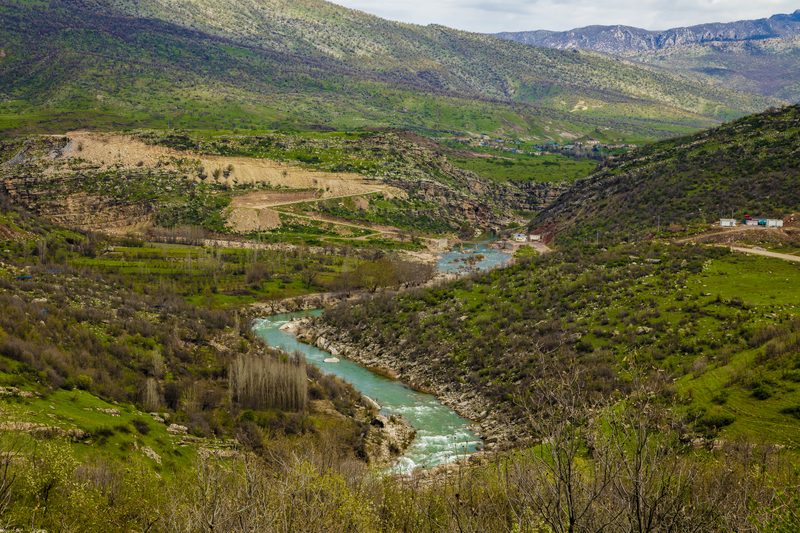
Kurdistan is the only part of Iraq where a road trip makes sense. The south is flat desert. Central Iraq is checkpoint-heavy. But Kurdistan? It’s mountain passes, green valleys, waterfalls, and ancient villages perched on clifftops — all connected by roads that are genuinely good.
I run this Kurdistan road trip regularly with guests, and it’s one of my favourite itineraries to guide. Five days is the sweet spot — enough time to see Erbil, Duhok, Amadiya, the Rawanduz canyon, and Sulaymaniyah without rushing. You can extend to six or seven days if you want to go deeper. For the full picture of what to expect across the country, start with the Iraq travel guide.
Here’s the route, day by day, with the practical details you actually need.
The Route Overview
The loop runs: Erbil → Duhok → Amadiya → Rawanduz & Hamilton Road → Sulaymaniyah. Total driving distance is roughly 600 to 700 kilometres over five days, depending on which detours you take. No single day involves more than three hours of driving.
Road conditions in Kurdistan are generally good — paved highways between cities, well-maintained mountain roads with guardrails on the scenic stretches. Signage is in Kurdish, Arabic, and English. Fuel is cheap (around $0.65–1.00 per litre depending on grade), and you’ll pass petrol stations regularly. This isn’t the adventure driving you might expect in Iraq. It’s comfortable, scenic, and very doable.
Day-by-Day Itinerary
Day 1 — Erbil
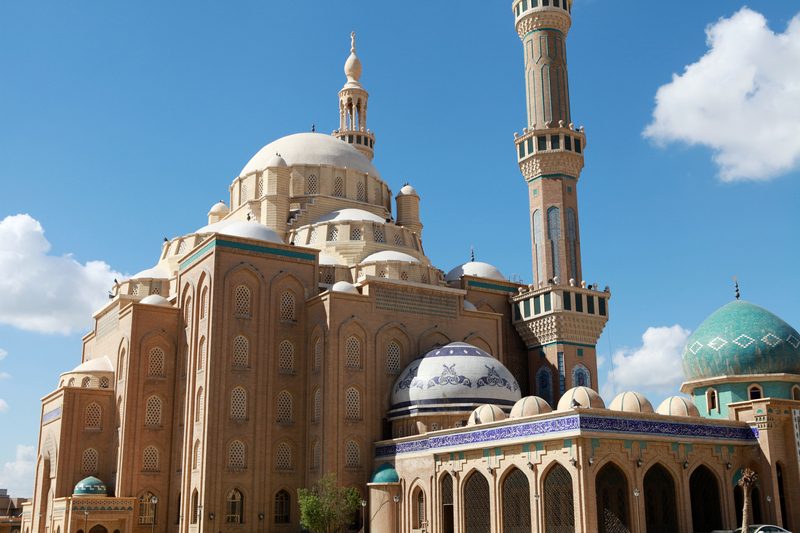
Start in Erbil, the Kurdish capital. The Citadel is the centrepiece — a fortified mound that’s been continuously inhabited for over 6,000 years, making it one of the oldest continuously occupied sites on earth. It’s a UNESCO World Heritage site, and you can walk through its restored gates and alleys in about an hour.
Below the Citadel is the Qaysari Bazaar — a sprawling covered market where you’ll find spices, fabrics, gold, and more tea than you could drink in a lifetime. The Kurdish Textile Museum inside the Citadel is small but worth the stop if you’re interested in traditional weaving.
In the evening, Erbil comes alive. The area around the Citadel fills with families, street food vendors, and cafés. Kurdish kebab — lamb, minced, served with flatbread and raw onion — is the staple, and it’s excellent. For something more upscale, the Gulan neighbourhood has restaurants serving everything from traditional Kurdish to Italian.
Stay: Erbil. Hotels range from budget ($30–50/night) to international chains ($100+).
Day 2 — Erbil to Duhok (via Lalish)
The drive from Erbil to Duhok takes about two and a half hours on the main highway — around 160 kilometres. But the detour to Lalish is what makes this day special.
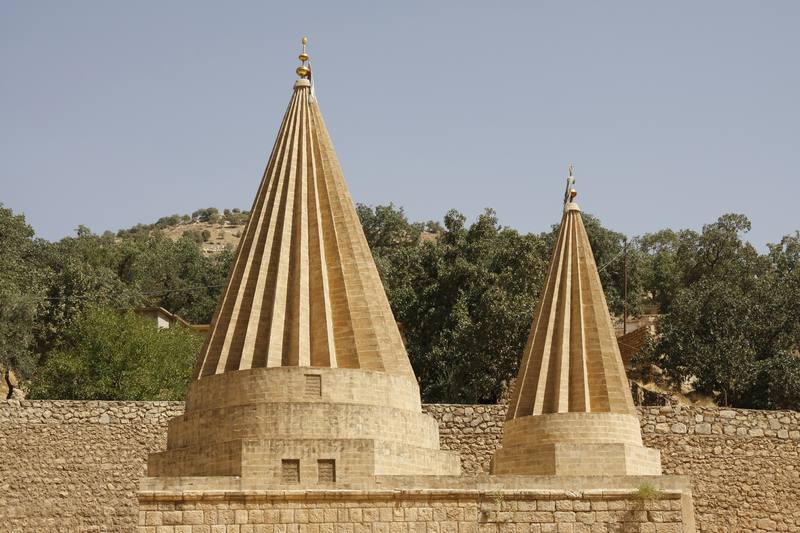
Lalish is the holiest site in the Yazidi religion — a mountain valley temple about 60 kilometres north of Mosul. The conical stone domes rise out of a quiet valley, and the entire complex radiates a calm that’s hard to describe. Visitors must remove their shoes before entering (bring thick socks — the stone floors are cold), and you step over every threshold rather than on it. A local caretaker will often appear to show you around and explain the traditions.
The Yazidi people have been persecuted for centuries, most recently during the 2014 ISIS genocide. Visiting Lalish isn’t just culturally fascinating — it’s a way to bear witness. The community welcomes respectful visitors, and it’s one of the most moving stops on any Iraq itinerary.
From Lalish, continue north to Duhok — another hour or so. Duhok is a relaxed university city nestled between mountains. Walk along the lake in the evening, visit the waterfall park on the edge of town, and eat at one of the restaurants lining the main boulevard.
Stay: Duhok. Mid-range hotels around $40–60/night.
Day 3 — Duhok to Amadiya
Amadiya is about 70 kilometres north of Duhok — roughly an hour and a half of driving through increasingly dramatic mountain scenery. The road winds through valleys with villages, orchards, and roadside cafés where locals sit with their feet in the stream drinking tea.
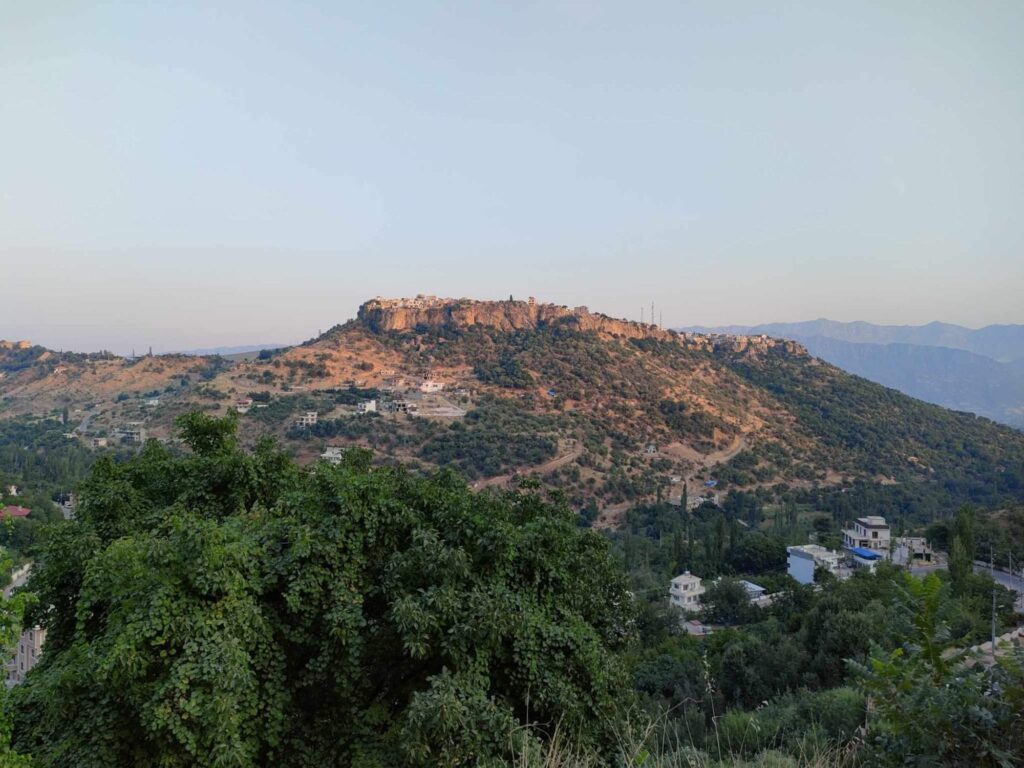
Then Amadiya appears. It’s a village built on top of a flat mountain plateau, sitting 1,400 metres above sea level. The plateau is only about one kilometre long and 550 metres wide, and the entire village — mosques, churches, homes, shops — fits inside it. The views from the edges are staggering: sheer cliffs dropping away to green valleys on every side. It’s been inhabited since at least 3000 BC, and for nearly 500 years it served as the capital of the Bahdinan Emirate.
Enter through the ancient Bahdinan Gate, wander the narrow streets, and talk to the locals. Amadiya has historically been home to Muslims, Christians, and — until the mid-20th century — a significant Jewish community. That coexistence is part of what makes it special. You won’t need more than a couple of hours to explore, but you’ll remember it.
After Amadiya, you have options. You can return south towards Shaqlawa or Erbil to set up for the next day’s drive, or — if time allows — continue through the mountains towards Barzan and the approach to Rawanduz canyon.
Stay: Shaqlawa (mountain resort town, cooler temperatures) or return to Erbil.
Day 4 — Hamilton Road & Rawanduz
This is the day everyone talks about afterwards. The Hamilton Road is a mountain highway built in the 1920s and 1930s by a New Zealand engineer named Archibald Hamilton. It cuts through some of the most spectacular mountain scenery in the entire Middle East, winding along gorges, past waterfalls, and through tunnels carved into solid rock.
The highlight is the Gali Ali Beg gorge — a deep canyon with turquoise water, dramatic cliff faces, and the Bekhal waterfall cascading down the rockface. There are cafés and picnic spots along the gorge where you can stop and take it in. Rawanduz town sits at the head of the canyon and makes a good base for exploring.
The entire drive from Erbil through the Hamilton Road and back can be done in a long day. Take your time — this is the scenic centrepiece of the Kurdistan road trip, and rushing it defeats the purpose.
Stay: Shaqlawa, Rawanduz area, or Erbil.
Day 5 — Sulaymaniyah
The drive from Erbil to Sulaymaniyah takes about two and a half hours — roughly 200 kilometres on a good highway. Sulaymaniyah (Slemani to the locals) is Kurdistan’s cultural capital, and the vibe is noticeably different from Erbil: more liberal, more artsy, more café culture.
Start at the Amna Suraka museum — the former intelligence headquarters of Saddam Hussein’s regime, now a museum documenting the atrocities committed against the Kurdish people. The building still bears bullet holes and blast damage from the 1991 uprising when Peshmerga forces stormed it. Inside, the Hall of Mirrors contains 182,000 shards of broken mirror — one for each Kurd killed during the Anfal genocide campaign — lit by thousands of small lamps representing the villages destroyed. It’s free to enter, open Saturday to Thursday from 9am to 4pm, and it’s one of the most powerful museums I’ve ever walked through. Allow at least two hours.
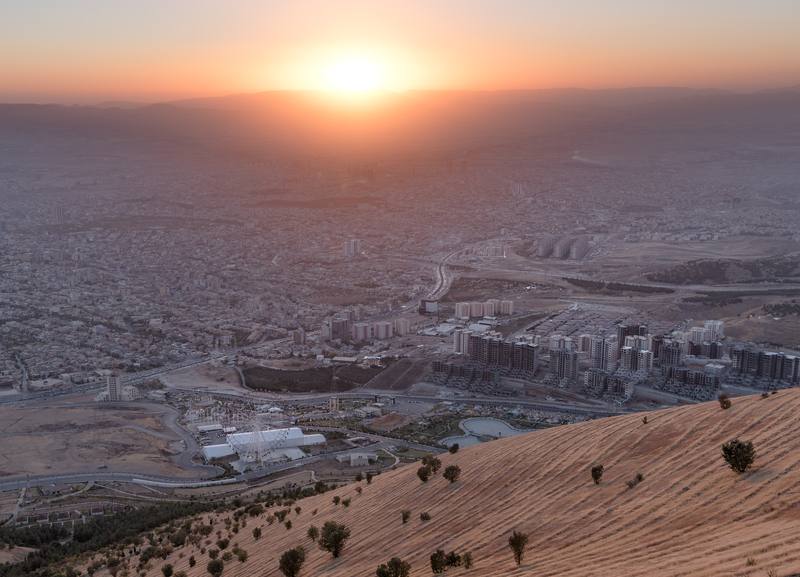
After Amna Suraka, decompress in Sulaymaniyah’s bazaar — one of the liveliest in Kurdistan. The café culture here is strong; Sulaymaniyah has more independent coffee shops per capita than anywhere else in Iraq. In the evening, drive up Azmar Mountain for sunset views over the city.
If you have extra days, extend from here: Dukan Lake is about an hour north and offers boating and lakeside restaurants. The Choman area near the Iranian border has some of Kurdistan’s most dramatic mountain scenery.
Stay: Sulaymaniyah. Good range of hotels from $30–80/night.
Can You Self-Drive?
Yes — and Kurdistan is one of the very few parts of the Middle East where self-driving as a tourist is genuinely practical. Car rental is available in Erbil (you’ll need an international driving licence), roads are signed in English, and traffic is manageable outside the city centres.
Fuel is extremely cheap — under $1 per litre for most grades — and you’ll find petrol stations along every major route. The roads between cities are well-maintained dual carriageways. Mountain roads are paved and have guardrails, though they’re narrower and require more attention.
That said, a guide adds real value. I know the back roads, the best viewpoints, the family-run restaurants that don’t appear on Google Maps, and the cultural context that turns a scenic drive into something you actually understand. I also speak Kurdish and Arabic, which helps at the occasional checkpoint and makes conversations with locals go from polite nods to actual exchanges. If you’re considering the guided option, the Kurdistan tour covers this route and more.
Best Time for This Trip
May to June is ideal. The valleys are green, the waterfalls are flowing from snowmelt, and the temperatures are warm but not oppressive — mid-20s to low 30s Celsius in the lowlands, cooler in the mountains.
Want me to plan this route for you?
I run Kurdistan as a standalone tour or combined with Baghdad and Babylon. Tell me your dates and I’ll build an itinerary around what you want to see — whether that’s five days in the mountains or a full two-week Iraq experience.
September to October is the second-best window. The summer heat has broken, the skies are clear, and the light is beautiful for photography. Waterfalls will be lower than in spring but still flowing.
July and August work but it’s hot in Erbil and Sulaymaniyah — mid-40s Celsius. The mountain areas stay cooler, which is why Iraqi families flock to Shaqlawa and Duhok in summer.
Winter (December to February) brings snow to the mountains. Some high-altitude roads — including parts of the Hamilton Road and the approach to Amadiya — may be impassable. Erbil and Sulaymaniyah stay accessible but temperatures drop to single digits at night.
Practical Tips
Currency: Iraqi dinar (IQD). US dollars are widely accepted in hotels and shops in Erbil and Sulaymaniyah. ATMs exist but can be unreliable — bring cash as a backup. 1 USD is roughly 1,300 IQD.
Accommodation: Every city on this route has decent hotels. Erbil has the widest range. Duhok and Sulaymaniyah have solid mid-range options. Amadiya itself has very limited accommodation — most visitors stay in nearby Sulav or in Duhok.
Food: Kurdish cuisine is meat-heavy — kebabs, grilled chicken, dolma, and fresh bread with every meal. Roadside restaurants along the mountain routes serve simple but excellent food. Vegetarian options are limited but possible if you ask.
Mobile coverage: Korek and Asiacell are the main networks. Coverage is good in cities and along highways, but drops out in remote mountain areas — particularly around Amadiya and parts of the Hamilton Road. Download offline maps before you leave Erbil.
Safety: Kurdistan is safe. It has its own security forces (Peshmerga), its own borders, and a very different atmosphere from federal Iraq. Checkpoints exist but are quick and routine. As a tourist, you’ll have zero problems. For more detail on what to expect, the Kurdistan travel guide covers visas, packing, and seasonal advice.