Iraqi Kurdistan is the part of Iraq that surprises people most. Green mountains instead of desert. Modern malls next to ancient citadels. Craft beer bars in a country most people associate with conflict. Kurdistan has its own government, its own visa, its own language, and a very different feel from Baghdad and the south. For many travellers, it is the easiest entry point into Iraq — and for some, it is the entire trip.
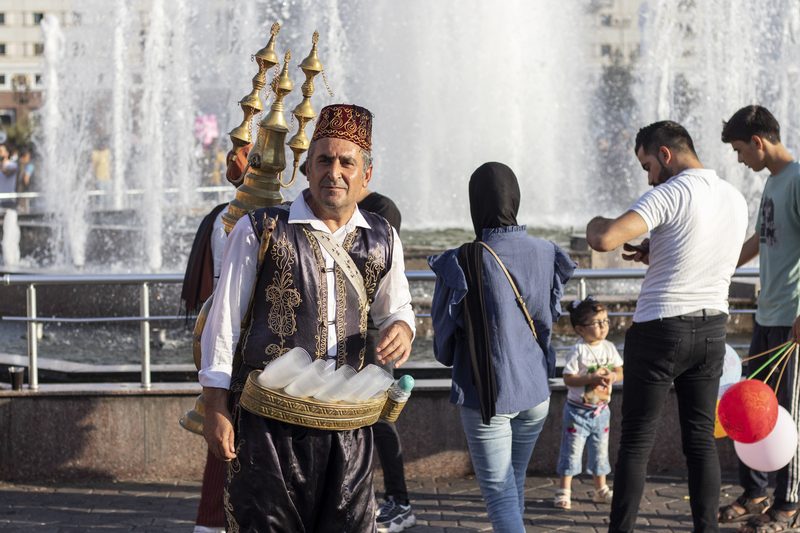
I run tours that cover Kurdistan on its own and tours that combine it with the rest of Iraq. Both are worth doing, and which one suits you depends on your time and your appetite for adventure. If you want the full picture, start with my Iraq travel guide. If Kurdistan is your focus, keep reading.
Why Visit Kurdistan?
Kurdistan is the safest region in Iraq, and it has been for years. The Peshmerga — Kurdistan’s military forces — maintain tight security, and the region was largely untouched by the violence that affected the rest of the country during the ISIS years. The infrastructure is better than in federal Iraq: roads are good, hotels are modern, restaurants are plentiful, and English is more widely spoken than in the south.
But safety and convenience are not the main reasons to come. Kurdistan has genuine depth. Erbil’s citadel is one of the oldest continuously inhabited sites on Earth. Sulaymaniyah has a cafe and cultural scene that rivals anywhere in the Middle East. The mountain scenery in the north — canyons, waterfalls, high villages — is spectacular. And the Kurdish people are among the most welcoming you will meet anywhere. They are proud of their region, proud of their culture, and genuinely delighted when foreigners come to see it.
Erbil
Erbil is the capital of the Kurdistan Region and, for most visitors, the first stop. It is a modern city built around an ancient core — gleaming shopping malls and international hotel chains surround a citadel that has been inhabited for at least 6,000 years. The contrast is striking and it is part of what makes Erbil interesting.
Erbil Citadel (UNESCO World Heritage Site)
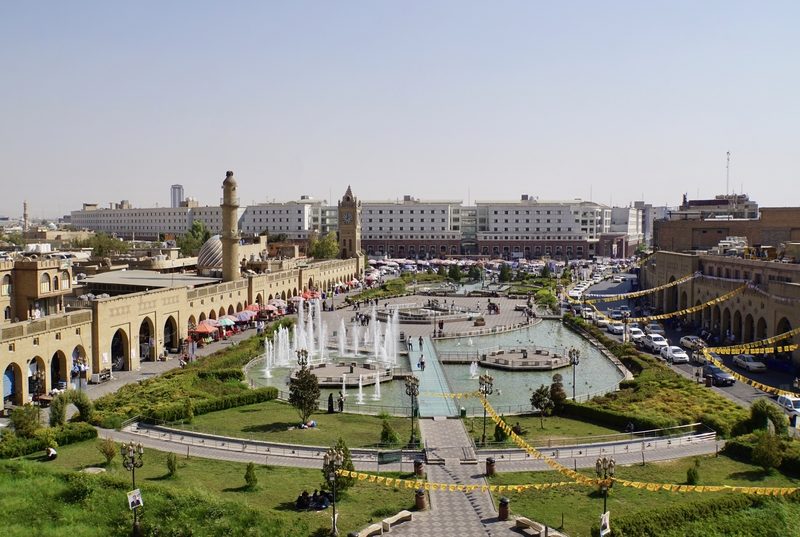
The Erbil Citadel sits on top of an enormous oval-shaped tell — a mound created by thousands of years of people living, building, demolishing, and rebuilding on the same spot. The mound rises about 30 metres above the modern city, and the evidence of occupation goes back to at least the 5th millennium BC. NASA has described it as possibly the oldest continuously occupied human settlement on Earth. It was inscribed as a UNESCO World Heritage Site in 2014.
The citadel you see today is mainly 19th-century Ottoman-era buildings forming a continuous wall of tall facades that looks like a fortress from below. The fan-shaped layout of streets and alleys inside dates to the Ottoman period. A major restoration project has been ongoing since 2007, and while it moves slowly, there are now small museums, restored houses, and a hammam open to visitors. The citadel is most impressive from the square below at sunset, when the facades glow and the plaza fills with families, vendors, and the smell of street food.
Kurdish Textile Museum
Inside the citadel, the Kurdish Textile Museum occupies a beautifully restored traditional house. The collection covers Kurdish weaving traditions from across the region — kilims, clothing, embroidery, and tribal textiles. It is small but well curated, and it gives you a sense of Kurdish culture that the modern malls of Erbil do not. Allow about 30 minutes.
Erbil Bazaar
Below the citadel, Erbil’s bazaar sprawls through narrow covered streets that have been a trading hub since at least the 12th century. This is where you buy spices, tea, fabrics, household goods, and Kurdish clothing. The energy is excellent — loud, crowded, colourful, and completely authentic. The food stalls here serve some of the best kebab and fresh bread in the city. Come hungry.
Where to Stay in Erbil
Erbil has the best hotel infrastructure in Iraq. International chains operate here, and there are good mid-range options too. The area around the citadel and bazaar is the most interesting for visitors. I arrange accommodation for all my guests and know which hotels offer genuine quality versus just a flashy lobby.
Sulaymaniyah
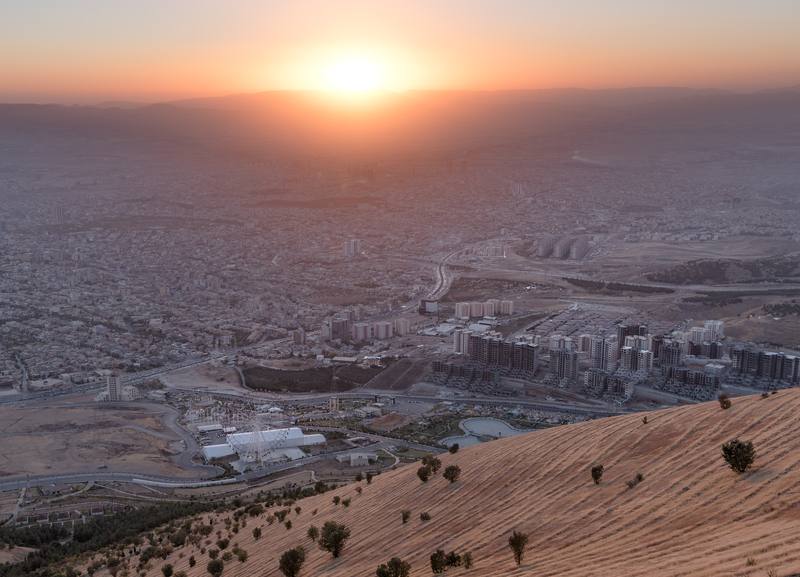
If Erbil is Kurdistan’s political and commercial capital, Sulaymaniyah is its cultural heart. It is a university city with a strong intellectual tradition, a thriving cafe scene, and a more liberal, artistic atmosphere. Many travellers prefer Sulaymaniyah to Erbil precisely because it feels less polished and more real. The mountains that ring the city are beautiful, and the pace of life is slightly slower.
Amna Suraka (Red Security Museum)
This is one of the most powerful museum experiences in Iraq. Amna Suraka — meaning “Red Security” — was the northern headquarters of Saddam Hussein’s intelligence agency from 1979 to 1991. Thousands of Kurdish political prisoners, students, and dissidents were held here, tortured, and killed. In March 1991, Kurdish Peshmerga fighters and civilians stormed the building and captured it after fierce fighting.
Today it is a museum, preserved largely as it was the day it fell. The main building is still pocked with bullet holes and shell damage. Inside, you can walk through the original prison cells, see the torture rooms, and visit the Hall of Mirrors — an installation containing 182,000 shards of broken mirror, one for each Kurd killed during the Anfal genocide campaign, with 4,500 lights representing the villages destroyed. Military vehicles, tanks, and artillery sit in the courtyard. It is free to enter, open six days a week (closed Fridays), and deeply affecting. Go with a guide if you can — the context makes a difference.
Sulaymaniyah Bazaar
Sulaymaniyah’s bazaar is more traditional and less tourist-oriented than Erbil’s. The covered market stretches through the old centre, selling everything from fresh produce and spices to handmade shoes and copper pots. It is an excellent place to wander without a plan and let the city show itself to you.
Azmar Mountain
Azmar Mountain rises directly above Sulaymaniyah and offers panoramic views over the entire city and the surrounding plains. There is a road to the top and a cable car option. It is a popular spot with locals in the evening, and the views at sunset are outstanding. A good way to end a day in Sulaymaniyah.
Cafe and Cultural Scene
Sulaymaniyah has more independent cafes and bookshops per square metre than anywhere else in Iraq. The cafe culture here is serious — people come to talk, argue, read, and sit for hours over tiny cups of Kurdish tea or strong coffee. There are also art galleries, live music venues, and a growing restaurant scene. If you want to sit with Kurds and have real conversations, Sulaymaniyah is the place.
Duhok and Beyond
The area north and east of Erbil is where Kurdistan becomes truly dramatic. The mountains rise sharply, the valleys are deep and green, and the scenery is completely different from anything you imagined Iraq could look like.
Amadiya
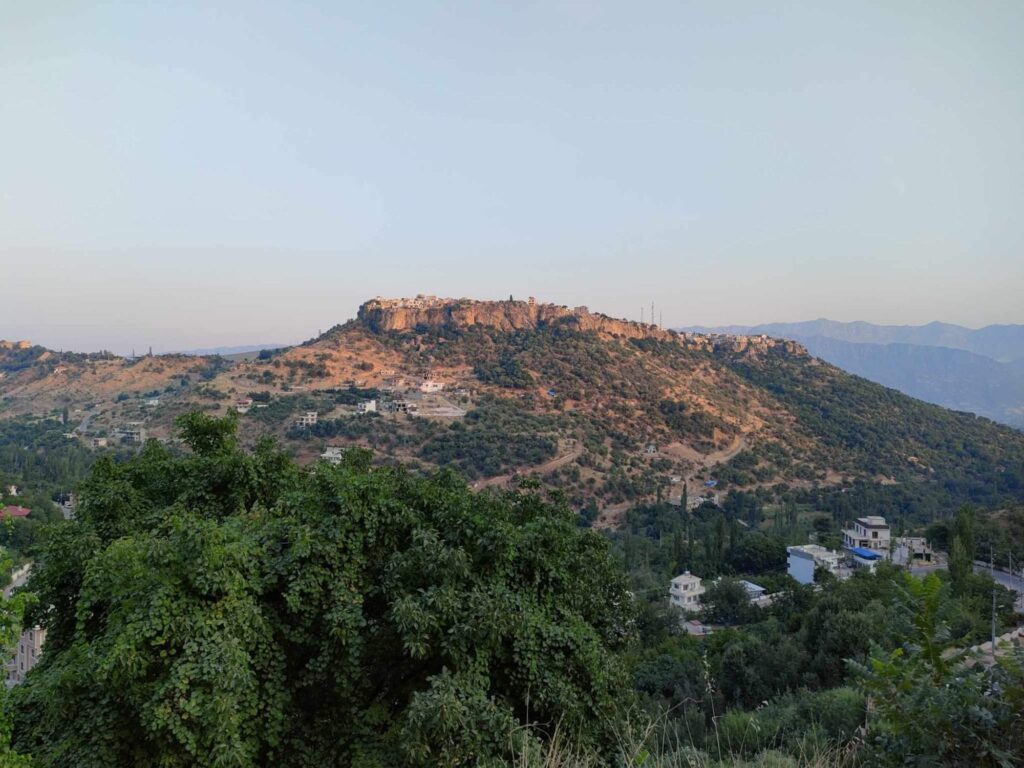
Amadiya is a small town perched on top of a flat mountain plateau, surrounded by deep valleys and peaks on all sides. It has been inhabited for thousands of years and has served as a fortress for whoever controlled it — Assyrians, Kurds, Ottomans. The views from the edges of the plateau are extraordinary. The town itself is quiet and traditional, with old stone houses and a relaxed atmosphere. It is one of my favourite stops in Kurdistan.
Gali Ali Beg and Bekhal Waterfalls
The Gali Ali Beg canyon, between Erbil and the Iranian border, is one of the most scenic drives in Iraq. The road follows a river through a deep limestone gorge, with waterfalls dropping from the cliffs above. Gali Ali Beg waterfall is the showpiece — a cascade tumbling into a turquoise pool surrounded by rock walls. Bekhal waterfall, nearby, is another popular stop. Both are best visited in spring when the water flow is at its strongest.
Rawanduz Canyon
Near the waterfalls, Rawanduz canyon cuts through the mountains in a gorge so deep and narrow that the road along it feels almost reckless. The Hamilton Road, built in the 1930s, winds through the canyon with hairpin turns and dramatic drops. It is one of the great mountain drives in the Middle East, and the scenery is unforgettable. Combined with the waterfalls and a stop in Amadiya, this makes for an excellent full-day road trip from Erbil.
Kurdistan Visa
Kurdistan has its own visa system, separate from federal Iraq. For most Western travellers (EU, US, UK, Canada, Australia, and others), you can get a Kurdistan eVisa online or on arrival at Erbil or Sulaymaniyah airports. It costs around $75, is valid for 30 days, and the process is straightforward.
However — and this is important — a Kurdistan visa is only valid in Kurdistan. It does not allow you to travel to Baghdad, Basra, or anywhere in federal Iraq. If you want to visit both Kurdistan and the rest of Iraq, you need a federal Iraq eVisa ($160), which covers the entire country including Kurdistan. If you fly into Erbil on a Kurdistan-only visa and then try to cross into federal Iraq, you will be turned back or worse.
My advice: if there is any chance you want to see Baghdad, the south, or Mosul, get the federal visa. It covers everything. If you are only visiting Erbil, Sulaymaniyah, and the Kurdish mountains, the Kurdistan visa is cheaper and simpler. For full details, see my Iraq visa guide.
How Kurdistan Differs From Federal Iraq
Kurdistan functions almost as a separate country within Iraq. It has its own regional government (the KRG), its own parliament, its own military (the Peshmerga), and its own immigration controls. The differences you will notice as a visitor are significant.
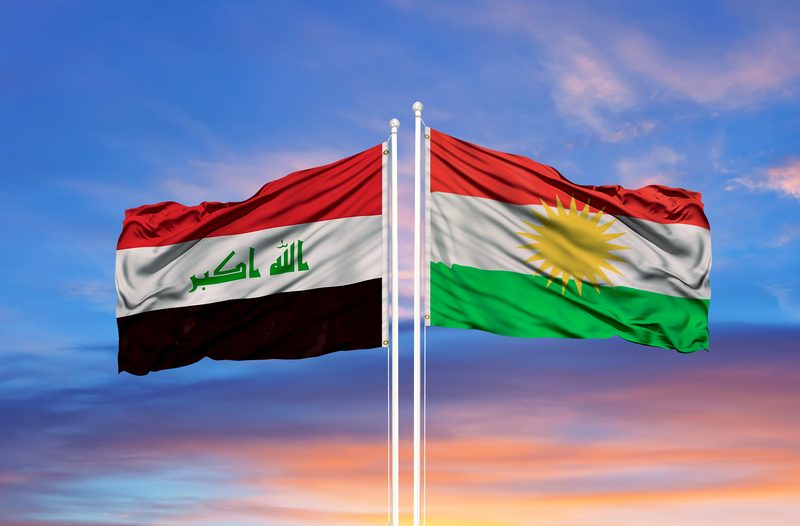
The language is Kurdish (Sorani in Erbil and Sulaymaniyah, Kurmanji in Duhok), not Arabic — though Arabic is understood and English is more common here than in the south. The dress code is more relaxed: women do not need to cover their hair, and Western clothing is normal. Alcohol is widely available in restaurants, hotels, and shops. Credit cards and US dollars are accepted in far more places than in federal Iraq, where cash is still king. The overall feel is more modern and more visibly prosperous.
None of this means Kurdistan is better or worse than the rest of Iraq — it is simply different. Baghdad has an energy and historical weight that Erbil cannot match. The Marshes, Babylon, and the Shia holy cities offer experiences you will not find in Kurdistan. But if you are nervous about visiting Iraq for the first time, Kurdistan is the gentlest introduction.
Getting to Kurdistan
Erbil International Airport (EBL) is the main gateway, with direct flights from Istanbul, Dubai, Amman, Vienna, and other cities. Sulaymaniyah International Airport (ISU) has fewer connections but serves as a good alternative, especially if Sulaymaniyah is your focus.
You can also enter by land from Turkey through the Ibrahim Khalil border crossing near Zakho — a popular route for overland travellers. From Baghdad, you can fly to Erbil in about an hour or drive in 5-6 hours.
On my tours, I handle all logistics. If you are combining Kurdistan with Baghdad and the south, I coordinate the route so the visa, transport, and checkpoints are seamless. If you are doing Kurdistan alone, I can meet you at the airport and start immediately.
Practical Information
Getting Around
Within Kurdistan, travel is by car. Roads between cities are good and well maintained. Erbil to Sulaymaniyah takes about 2.5 hours. Erbil to Duhok is about 2 hours. The mountain roads are slower but scenic. I provide a driver and vehicle on all tours.
Money
The currency is the Iraqi dinar (IQD), but US dollars are widely accepted in Kurdistan, especially in Erbil. Credit cards work in hotels, malls, and some restaurants — far more than in federal Iraq. Still, carry cash for bazaars, street food, and smaller towns.
Language
Kurdish is the main language. English is spoken in hotels, tourist areas, and by younger Kurds in cities. Arabic is understood but not always the first language. On my tours, language is never an issue — I handle all communication.
Safety
Kurdistan is safe. It is the safest part of Iraq and has been stable for many years. Violent crime against foreigners is extremely rare. The Peshmerga maintain strong security, and the region has not experienced the instability that has affected other parts of the country. Normal travel precautions apply, but there is no need for the heightened awareness required in some other parts of Iraq.
Best Time to Visit
Spring (March to May) is the best season. The mountains are green, the wildflowers are blooming, and the weather is warm but not oppressive. Autumn (September to November) is also excellent. Summer can be very hot in the cities, though the mountains stay cooler. Winters are cold in the highlands, with snow at altitude.
Kurdistan on My Tours
I offer Kurdistan as a standalone tour and as part of my Kurdistan tour itinerary. A Kurdistan-only trip typically takes 5-7 days and covers Erbil, Sulaymaniyah, the mountain region, and Duhok. For travellers who want everything, my Complete Iraq Tour combines Kurdistan with Baghdad, Babylon, the Marshes, and the south in 10-12 days.
Kurdistan works well for first-time visitors to Iraq who want an easier introduction, and it works equally well for experienced travellers who have already seen Baghdad and want to explore the north in depth.
Kurdistan standalone or combined with Baghdad and Babylon — I run both.
Tell me what you want to see and how many days you have, and I will build the right itinerary.
Frequently Asked Questions
Is Kurdistan safe to visit?
Yes. Kurdistan is the safest part of Iraq and has been stable for many years. It is a popular destination for international travellers, and violent crime against tourists is extremely rare.
Do I need a separate visa for Kurdistan?
It depends. If you are only visiting Kurdistan, you can use the Kurdistan eVisa ($75). If you want to visit federal Iraq as well (Baghdad, Basra, Mosul, etc.), you need the federal Iraq eVisa ($160), which also covers Kurdistan. A Kurdistan-only visa does not allow entry into federal Iraq. See my Iraq visa guide for full details.
Can I visit Kurdistan independently?
Kurdistan is the most independent-travel-friendly part of Iraq. You can navigate Erbil and Sulaymaniyah on your own, take taxis, and find English-speaking locals. However, a guide adds significant value for the mountain areas, cultural context, and logistics — especially if you want to combine Kurdistan with the rest of Iraq.
How many days do I need for Kurdistan?
A minimum of 4-5 days to cover Erbil, Sulaymaniyah, and one day in the mountains. A week gives you a more relaxed pace and time for Duhok and the northern villages. If combining with federal Iraq, plan for 10-12 days total.
What is the best time to visit Kurdistan?
Spring (March-May) is ideal — green mountains, wildflowers, comfortable temperatures. Autumn (September-November) is also excellent. Summer is hot in the cities but cooler in the highlands. Winter brings cold temperatures and snow at altitude.