Karbala and Najaf are two of the holiest cities in Shia Islam — but you don’t need to be Muslim to be moved by them. The golden domes, the mirror-tiled interiors, the sheer emotional intensity of the shrines, the world’s largest cemetery stretching to the horizon — these are places that affect everyone who visits, regardless of faith. I take guests to both cities regularly, and the most common reaction from non-Muslim visitors is the same: “I wasn’t expecting that.”

They’re close together (about an hour apart by car), close to Baghdad, and easy to combine with Babylon. If you’re visiting Iraq, these cities deserve a place on your itinerary. Here’s what to expect. For the full picture of planning a trip, start with my Iraq travel guide.
Karbala
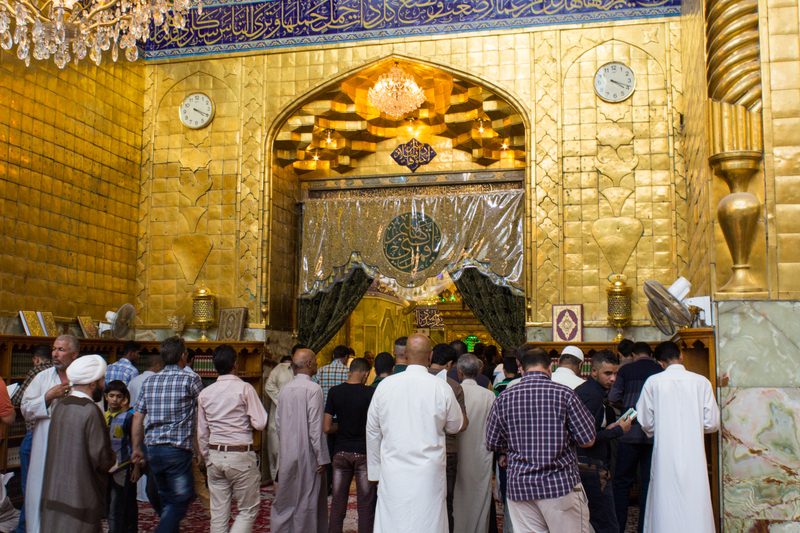
Karbala’s significance centres on a single event: the Battle of Karbala in 680 AD. Imam Hussein, the grandson of the Prophet Muhammad, was killed here along with 72 of his companions by the army of the Umayyad caliph Yazid. That battle — and Hussein’s refusal to submit to a ruler he considered unjust — became the defining moment of Shia Islam. Everything you see in Karbala today exists because of what happened on that desert plain nearly 1,400 years ago.
Imam Hussein Shrine
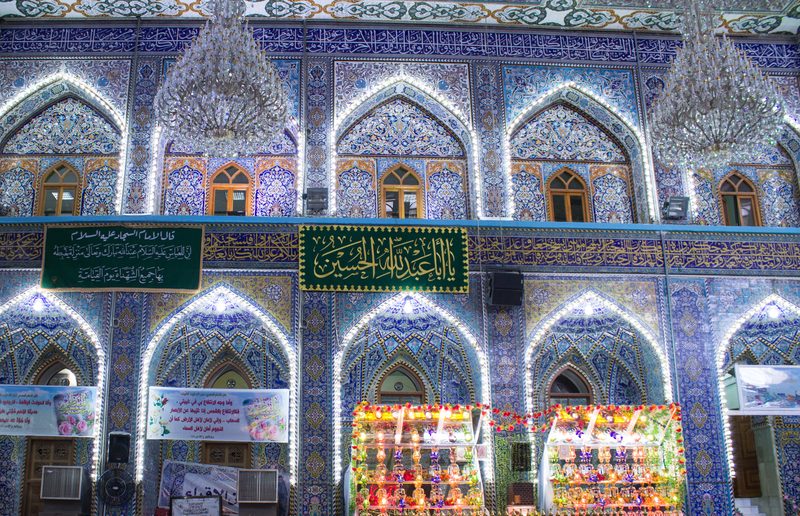
The shrine built over Imam Hussein’s burial site is the focal point of the city and one of the most important pilgrimage sites in the Islamic world. The golden dome and minarets are visible from across Karbala, and the interior is extraordinary — walls and ceilings covered entirely in mirror mosaic and intricate tilework that catches and multiplies light from every angle.
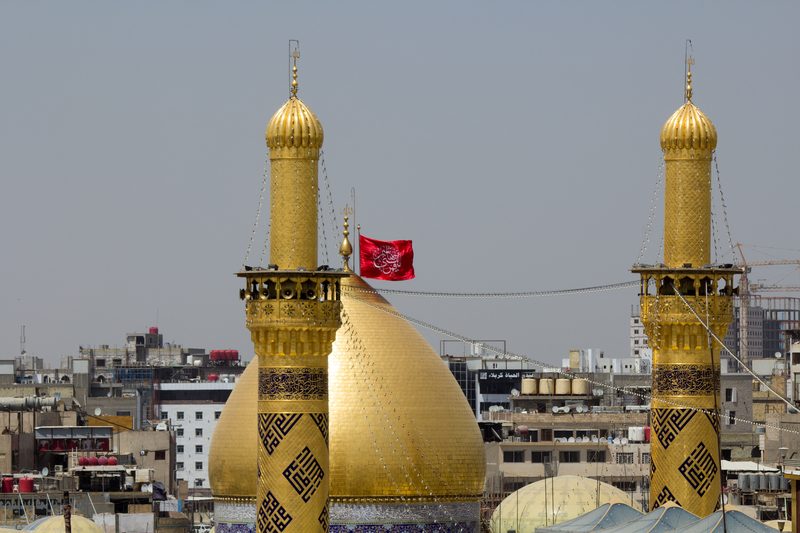
What strikes most visitors isn’t just the architecture. It’s the atmosphere. Pilgrims come from across Iraq, Iran, Pakistan, India, and beyond. Many are visibly emotional. The energy inside the shrine — grief, devotion, reverence — is unlike anything you’ll experience at a typical tourist site. Even if you know nothing about the history, you’ll feel the weight of the place.
Imam Abbas Shrine
A short walk from the Hussein shrine is the shrine of Abbas ibn Ali, Hussein’s half-brother who was killed trying to bring water to the besieged camp during the battle. The Abbas shrine is equally stunning architecturally — another golden dome, more mirror work, and the same intense devotional atmosphere. The two shrines are connected by a wide pedestrian boulevard lined with shops selling religious items, abayas, and sweets.
Visiting Karbala as a Non-Muslim
Yes, non-Muslims can visit Karbala and its shrines — including the interiors. Many tourists do. You need to dress appropriately and behave respectfully, which I’ll cover below, but there are no restrictions on entering the shrines themselves. I take non-Muslim guests inside regularly. The key is proper dress and a respectful attitude, nothing more.
Najaf
Imam Ali Shrine
Najaf is built around the shrine of Ali ibn Abi Talib — the cousin and son-in-law of the Prophet Muhammad, and the first Imam of Shia Islam. The shrine’s golden dome dominates the city skyline, and for Shia Muslims, only the Great Mosque of Mecca and the Prophet’s Mosque in Medina rank higher as pilgrimage destinations.
The same applies for non-Muslim visitors as in Karbala — you can enter the shrine fully, interior included, with appropriate dress. The scale and craftsmanship inside is breathtaking — gold, mirrors, and calligraphy cover every surface.
Wadi al-Salam Cemetery
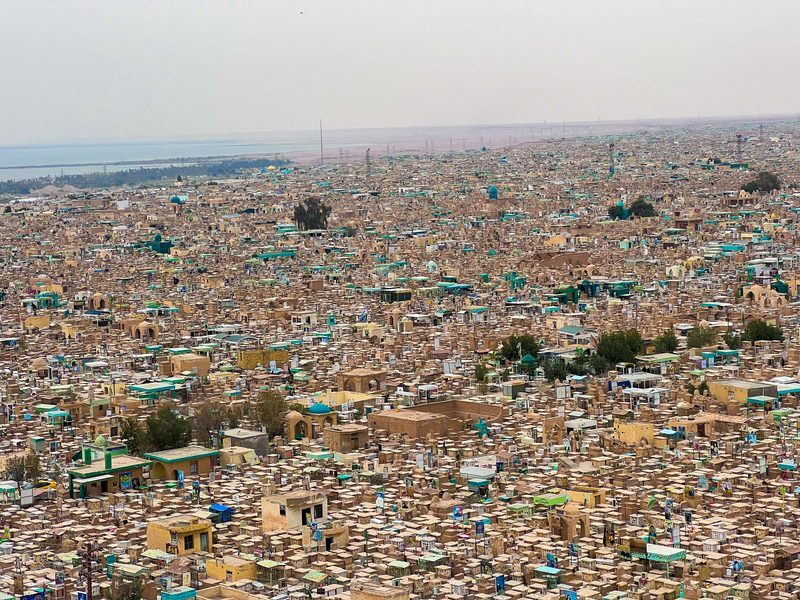
This is the part of Najaf that surprises most visitors. Wadi al-Salam (“Valley of Peace”) is the largest cemetery on Earth — confirmed by Guinness World Records. It covers over 1,485 acres and contains more than six million burials, with interments continuing daily for over 1,400 years. Shia Muslims from around the world choose to be buried here because of the cemetery’s proximity to Imam Ali’s shrine.
Walking through Wadi al-Salam is an extraordinary experience. Rows of above-ground crypts, mausoleums, and family tombs stretch as far as you can see in every direction — a city of the dead that dwarfs the living city beside it. Some crypts are simple brick and plaster. Others are room-sized family structures topped with domes. The cemetery is on the UNESCO Tentative List for World Heritage status.
Most tourists find Wadi al-Salam unexpectedly moving. There’s something about the sheer scale of it — the accumulated weight of millions of lives — that puts everything into perspective. I always include it in Najaf visits, and guests consistently tell me it was one of the most memorable parts of their trip.
Najaf Old City
The old city around the shrine is worth exploring. Narrow lanes wind between traditional houses, tea shops, and small markets selling everything from religious texts to perfume. Najaf has a scholarly atmosphere — it’s home to one of the most important Shia seminaries (hawza) in the world, and you’ll see religious students in traditional dress throughout the old quarter. The markets nearest the shrine sell prayer beads, turbah (prayer stones), and beautifully calligraphed Qurans.
What Non-Muslim Visitors Need to Know
Dress Code
Both cities are conservative, and the shrines enforce strict dress codes. For men: long trousers and long sleeves (no shorts, no tank tops). For women: a full-length abaya (loose-fitting robe) and headscarf that covers the hair. Black is traditional and easiest, but other dark colours are generally accepted. I help my female guests source or borrow an abaya before we visit — it’s simple to arrange and you can keep it for other shrine visits during the trip.
Everyone removes shoes before entering shrine areas. Bags are checked at security. These are the same rules that apply to Muslim visitors.
Photography
Exterior photography of the shrines, the courtyards, and the surrounding areas is generally fine. Interior photography rules vary — some areas allow it, others don’t. Phone cameras are more commonly permitted than large camera setups. Always ask me or the guards before photographing inside. At Wadi al-Salam, photography is usually permitted but be sensitive around grieving families.
Behaviour
Be quiet, respectful, and observant. Don’t eat or drink in front of shrine entrances. Don’t point your feet toward the shrine interior. If you see mourning or prayers, give people space. None of this is difficult — it’s the same kind of respectful behaviour you’d show at any sacred site worldwide. I brief all my guests before we enter, and I’m always there to guide you through the etiquette.
Practical Information
Getting There
Karbala is about 100 kilometres southwest of Baghdad — roughly a 2-hour drive. Najaf is another hour south of Karbala (about 80 km apart), making it approximately 2.5 hours from Baghdad by car. Both cities have well-maintained highways and the drive is straightforward. I arrange all transport for my guests as part of any tour that includes these cities.
Can You Visit as a Day Trip?
A day trip from Baghdad covering both Karbala and Najaf is tight but doable if you start early. You’ll get the highlights — the main shrines in both cities plus Wadi al-Salam — but you’ll be moving quickly. A better option is to combine them with Babylon over two days: Baghdad to Babylon and Karbala on day one, Najaf on day two, then back to Baghdad or south toward Nasiriyah. That gives you time to actually absorb the places rather than rushing through.
When to Visit
You can visit Karbala and Najaf year-round, but timing matters. The one period I strongly recommend avoiding is Arbaeen — the annual pilgrimage marking 40 days after Ashura. Over 22 million pilgrims converge on Karbala during this period (the world’s largest annual gathering), with millions walking the 80-kilometre route from Najaf. In 2026, Arbaeen falls around early August. Muharram (the month of Ashura) is also extremely crowded, with large mourning processions throughout both cities.
Outside these periods, both cities are busy with pilgrims but completely manageable. The best months are October through April, when temperatures are comfortable for walking between shrines and exploring the old city.
I combine Karbala, Najaf, and Babylon into a single 2-day trip from Baghdad.
It’s one of the most popular routes I offer — ancient history, sacred architecture, and a complete picture of southern Iraq’s cultural depth in two days.
Frequently Asked Questions
Can non-Muslims visit Karbala and Najaf?
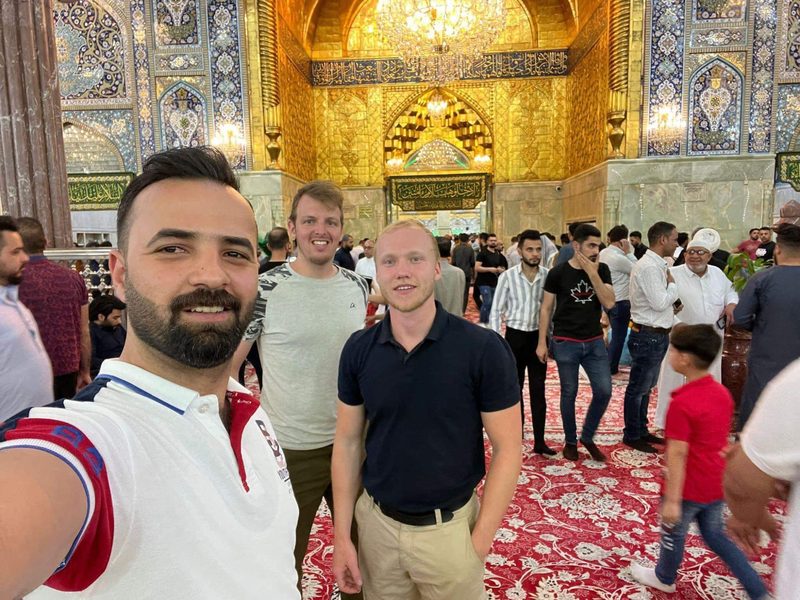
Yes. Both cities welcome non-Muslim visitors, and you can enter the shrines fully — interiors included — with appropriate dress and respectful behaviour. I take non-Muslim guests to both cities regularly, and they are always received warmly. A local guide helps you understand the etiquette and get the most from the visit.
Is it safe to visit Karbala and Najaf?
Both cities are very safe. They’re major pilgrimage destinations that receive millions of visitors annually, with extensive security infrastructure. Outside of the crowded Arbaeen and Muharram periods, they’re calm and welcoming. The standard highway checkpoints between Baghdad and the holy cities are routine.
Should I visit Karbala, Najaf, or both?
Both, if you have time. Each city has a different character — Karbala is more intensely emotional, focused on the story of Hussein’s martyrdom, while Najaf has broader appeal with the Imam Ali shrine, the old city, and Wadi al-Salam. If you genuinely can only pick one, I’d suggest Najaf for the combination of the shrine and the cemetery. But the two cities are only an hour apart, so fitting in both is usually straightforward.
What should women wear when visiting the shrines?
Women need to wear a full-length abaya (a loose robe that covers the body) and a headscarf covering all hair. Black is traditional and the easiest option. I help all female guests arrange an abaya before we visit — you can purchase one inexpensively or borrow one. Men need long trousers and long-sleeved shirts. Everyone removes shoes before entering shrine areas.
Ready to plan your trip to Iraq’s holy cities? Karbala and Najaf are included in my Southern Iraq tour, which also covers Babylon, the Mesopotamian Marshes, and Ur. Browse my Iraq tour options or read the complete Iraq travel guide to start planning.