Mosul is not an easy place to visit. You will see destruction. You will see rubble that hasn’t been cleared, buildings that still lean at impossible angles, streets that look like an earthquake hit them. But you will also see markets that are buzzing again, mosques being rebuilt brick by brick, children playing in restored squares, and a city that absolutely refuses to disappear. Visiting Mosul is one of the most powerful experiences you can have in Iraq — or anywhere.

I have been bringing guests to Mosul since it became safe enough to visit, and what I tell everyone is the same: come with your eyes open. This is not a place for holiday photos. It’s a place that will change how you think about resilience. For the full picture of planning a trip, start with my Iraq travel guide.
Mosul Then and Now
In June 2014, ISIS swept into Mosul, Iraq’s second-largest city. Within weeks, their leader declared the formation of a so-called caliphate from the pulpit of Mosul’s Al-Nuri Mosque. For three years, they occupied the city, destroying churches, mosques, libraries, and ancient sites. The battle to liberate Mosul in 2016–2017 was one of the most destructive urban battles since World War II. By the time Iraqi forces recaptured the city in July 2017, much of the Old City on the western bank of the Tigris was in ruins.
Today, Mosul is rebuilding. The process is slow and uneven — some areas are fully restored, others are still flattened — but the direction is clear. Markets have reopened. Universities are running. Churches and mosques that were bombed are standing again. The city had a population of over two million before ISIS, and while not everyone has returned, the streets are busy, the cafes are full, and the energy is unmistakable. Mosul wants to live again, and you can feel it.
What to See in Mosul
Al-Nuri Mosque and the Al-Hadba Minaret
This is where it all started — and where the story of Mosul’s recovery begins. The Al-Nuri Mosque was built in 1172 by Nur al-Din Zangi, and for over 850 years its leaning minaret, known as Al-Hadba (“the hunchback”), defined Mosul’s skyline. It still appears on Iraq’s 10,000 dinar note. In July 2014, ISIS leader Abu Bakr al-Baghdadi stood at the mosque’s pulpit and declared the formation of his so-called caliphate. Three years later, as Iraqi forces closed in, ISIS packed the mosque with explosives and destroyed it rather than let it be recaptured.

The reconstruction, led by UNESCO with $115 million in international funding — much of it from the UAE — has been extraordinary. The minaret was rebuilt using traditional techniques and materials salvaged from the original rubble. During excavation, archaeologists discovered four 12th-century ablution rooms that nobody knew existed. The mosque reopened for worship during Ramadan 2026, and standing inside it now is genuinely moving. Where there was rubble, there is prayer again.
Church Square and Mosul’s Christian Heritage
A five-minute walk from the Al-Nuri Mosque takes you to one of the most meaningful stops in all of Mosul. Church Square — known locally as Hosh al-Bieaa — is surrounded by churches of four different Christian denominations: Syriac Orthodox, Syriac Catholic, Chaldean, and Armenian Orthodox. These churches stood here for centuries, side by side in a Muslim-majority city. ISIS damaged or destroyed all of them.
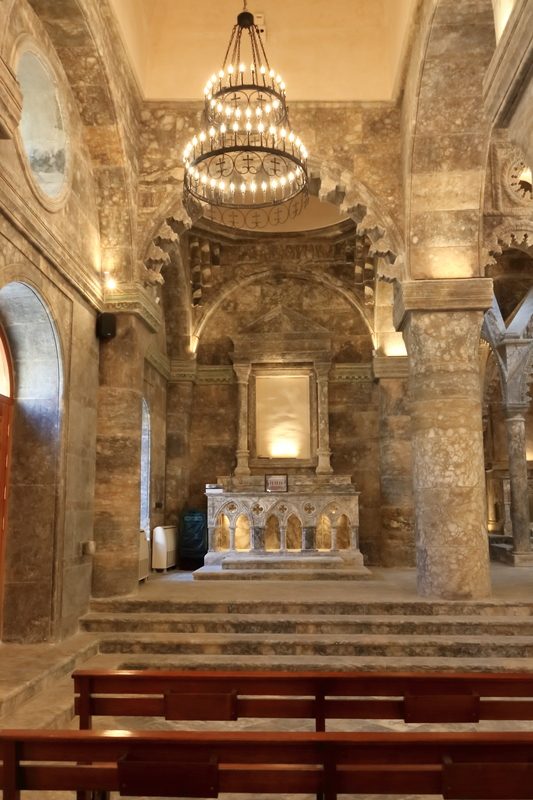
In March 2021, Pope Francis visited Church Square and prayed among the ruins of Al-Tahera, the Syriac Catholic Church of the Immaculate Conception. He released a white dove and spoke about peace and fraternity. It was the first ever papal visit to Iraq, and the images from that day went around the world.
Today, several of these churches have been restored. But the one I always make sure my guests see is the recently restored Mar Touma (Saint Thomas) Syriac Orthodox Church, just steps away. This is one of the oldest churches in Mosul — tradition says it dates back to the 7th century, built on the site where the Apostle Thomas himself once stayed. ISIS used it as a prison during the occupation. The restoration, completed in autumn 2025, is beautiful — new bell, restored stonework, the medieval Door of the Twelve Apostles painstakingly rebuilt.
But here is the detail that stays with people. Inside, on the right side just before the altar, there is a pillar with old Arabic inscriptions carved into the stone. If you look closely, you can see where ISIS fighters scratched it out with a knife. Those scratch marks are still there, even after the full restoration. Nobody has covered them up. It’s a small thing, easy to miss — but once you see it, it says more about what happened here than any museum exhibit ever could.
The Old City
Walking through Mosul’s Old City is an experience in itself. You don’t need a specific destination — the destination is the walk. Narrow streets wind between buildings in every possible state: some fully restored with fresh paint, some half-demolished and frozen in time, some nothing but rubble with a doorframe still standing. The contrast between destruction and reconstruction hits you at every turn.
What makes it worth visiting is the people. Shopkeepers reopening businesses in rebuilt frontages. Kids playing football in cleared lots. Old men sitting outside drinking tea as if nothing happened. Life is back in the Old City, and the determination of Mosul’s people is the most impressive thing you will see in Iraq.
Nineveh Archaeological Site
The ancient ruins of Nineveh — once the largest city in the world and the capital of the Assyrian Empire — sit within the modern city of Mosul, on the eastern bank of the Tigris. This was the heart of an empire that stretched from Egypt to the Persian Gulf in the 7th century BC, and the site is still surrounded by 12 kilometres of ancient walls.
The most famous feature was the Nergal Gate, flanked by massive winged bull statues called lamassu — mythological guardians with the body of a bull, wings of an eagle, and head of a man. ISIS destroyed the lamassu at the Nergal Gate with jackhammers in a video they released to the world. Excavation and restoration work is ongoing — German archaeologists from Heidelberg University are working with Iraqi authorities, and in 2025 they unearthed the largest lamassu ever found, a six-metre colossus from King Esarhaddon’s palace at Tell Nabi Yunus, along with fifteen more lamassu figures. Nineveh is giving up treasures that have been buried for 2,700 years.
The site is still an active excavation, and what you can see changes with each season. I keep up to date with what’s accessible and will brief you before we visit.
Bash Tapia Castle
Perched on the western bank of the Tigris, the ruins of Bash Tapia Castle date to the 12th century and once formed part of Mosul’s defensive walls. It’s partially ruined and there isn’t much signage, but the views over the river and toward the Old City are excellent. It’s a good stop for photographs and a quiet moment after the intensity of the Old City.
The Grand Mosque — Still Unfinished
Near the Tigris, not far from the Nineveh site, there is a large mosque that has been under construction for almost thirty years. Saddam started it — it was called the Saddam Mosque back then — and it was supposed to be the biggest in Mosul. The 2003 invasion stopped the work. ISIS damaged it further during the 2017 battle. The UAE put in $50 million in 2019 to restart construction, and some work has happened since then. But as of today, it is still not finished, and nobody has given a date for when it will be.
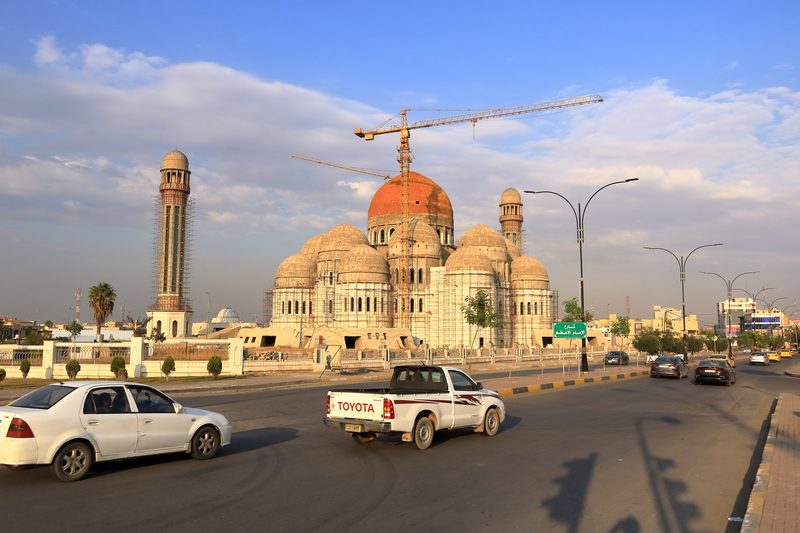
It is not on any tourist map and there is nothing to do there except look at it. But I always point it out when we drive past. You have a mosque that was started by a dictator trying to look religious, abandoned for twenty years, bombed by extremists, and now slowly being built by a foreign government’s money while the city around it is still clearing rubble. If you want to understand the layers of what Iraq has been through in the last three decades, this half-finished building on the river says more than most things I could tell you.
Mosul’s Markets
The markets of Mosul were famous long before ISIS — this was one of Iraq’s great trading cities. The souks are coming back to life, and the energy is remarkable. Spice stalls, metalwork, textiles, and food vendors packed into narrow lanes that feel as old as the city itself. The buzz of a functioning market in a city that was flattened less than a decade ago is one of the most hopeful things you will see in Iraq.
Hatra — A UNESCO Site Near Mosul
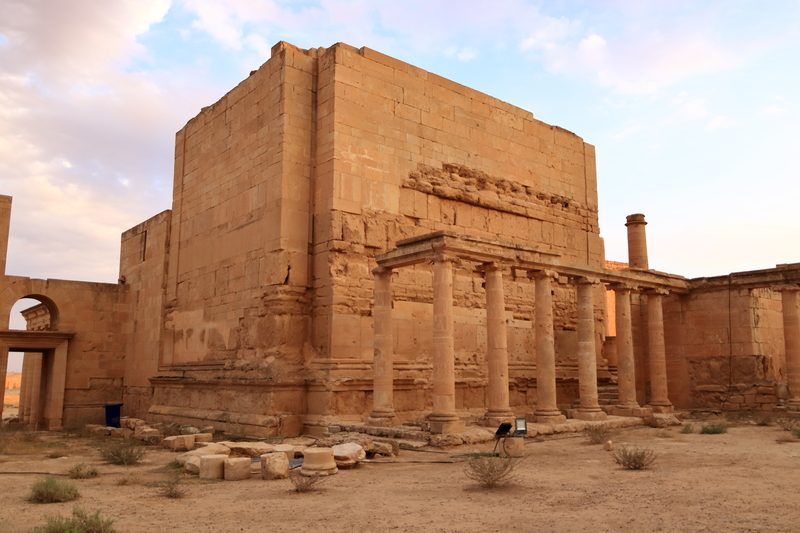
About 110 kilometres southwest of Mosul — roughly a two-hour drive — sits Hatra, one of the most impressive ancient sites in all of Iraq and one you should not miss if you are in the north.
Hatra was a fortified city that flourished under the Parthian Empire in the 1st and 2nd centuries AD, and it became the capital of what some historians consider the first Arab kingdom. The city was so well defended that it withstood sieges by two Roman emperors — Trajan in 116 AD and Septimius Severus in 198 AD. It finally fell to the Sassanid king Shapur I in 241 AD. If the name rings a bell from cinema, it’s because Hatra was used as the filming location for the opening scene of The Exorcist.
What survives is extraordinary. The Great Temple complex, with its massive barrel-vaulted iwans rising to 30 metres, blends Greek, Roman, and Eastern architectural styles. The double fortification walls — nearly four miles around — are remarkably preserved. You can walk through the site and see the same columns and archways that Roman legions failed to breach.
ISIS damaged Hatra after seizing the area in 2014, destroying some sculptures and reliefs. But the main structures — walls, towers, temple halls — survived. It has been a UNESCO World Heritage Site since 1985, and it’s currently on the List of World Heritage in Danger. Restoration work continues. Visiting Hatra is one of the highlights of any comprehensive Iraq tour.
Practical Information
Is Mosul Safe to Visit?
Yes, with a guide. Mosul is not a place I recommend visiting independently. Security is present throughout the city and the situation has been stable for years, but there’s limited tourist infrastructure, signage is almost non-existent, and some areas near the Old City still have structural dangers from damaged buildings. With a guide who knows the city and its current state, Mosul is manageable and rewarding. I know which areas are open, which routes are safe, and which sites are accessible on any given day. For more on Iraq’s overall security situation, see my article on whether Iraq is safe to visit.
How to Get to Mosul
Mosul is about 400 kilometres north of Baghdad — roughly 5–6 hours by road. You can also fly from Baghdad to Erbil (1 hour), then drive from Erbil to Mosul in about 1.5 hours, which is the faster and more comfortable option. On a multi-day tour, we typically drive north from Baghdad, stopping at Samarra on the way, making Mosul part of a wider northern Iraq itinerary.
Where to Stay
Hotels in Mosul are available but limited in quality compared to Baghdad or Erbil. There are decent mid-range options that are clean and comfortable, but don’t expect five-star standards. I arrange accommodation for all my guests and choose places I’ve personally checked.
How Long to Spend
I recommend at least two full days for Mosul itself, plus a day trip to Hatra. Combined with the drive from Baghdad or Erbil and stops at Samarra or Nimrud, the northern Iraq portion of a tour typically takes 3–4 days.
Mosul in My Tours
Mosul is included in my Complete Iraq Tour (10–12 days), which covers the entire country from south to north. It can also be added to custom itineraries for travellers with 8 or more days in Iraq. Because of the travel time required to reach Mosul from Baghdad, it is not practical on shorter tours of 5–7 days — those are better focused on the south and central regions.
Mosul requires a longer trip — at least 10 days in Iraq.
If you want to see the rebuilding city, the churches, Nineveh, and Hatra, ask me about the Complete Iraq Tour or a custom itinerary.
Frequently Asked Questions
Is Mosul safe to visit in 2026?
Yes. Mosul has been stable since its liberation in 2017 and is open to visitors. I do not recommend independent travel — a local guide is important for navigating the city, understanding what’s accessible, and staying safe around structurally damaged areas. With a guide, Mosul is a safe and deeply rewarding destination.
Can you visit the Al-Nuri Mosque?
Yes. The Al-Nuri Mosque has been reconstructed through a UNESCO-led project and is open to visitors. You can see the rebuilt mosque and its famous leaning minaret, Al-Hadba, which has been Mosul’s landmark for over 850 years.
How do I visit Hatra from Mosul?
Hatra is about 110 kilometres southwest of Mosul, roughly a two-hour drive. It is best visited as a day trip from Mosul with a guide and driver. The site is open to visitors, though facilities are very basic — bring water and sun protection. I include Hatra in all northern Iraq itineraries.
How many days do I need for Mosul?
A minimum of two days for Mosul itself, plus a day for Hatra. Combined with travel from Baghdad or Erbil, expect to spend 3–4 days on the northern Iraq portion of your trip. This is why Mosul typically requires a 10+ day Iraq itinerary.